Top 15 Shopify Apps for Higher Conversion Rates in 2026
Your Shopify store has traffic, but conversions aren’t where they want to be. The right apps can close that gap—but only if you’re solving the actual problems causing shoppers to leave.
This guide covers 15 apps across behavior analytics, social proof, upsells, and personalization, plus how to choose the right ones for your store and avoid common mistakes that hurt more than they help.
Why Your Shopify Store Needs Conversion Rate Apps
The best Shopify apps for increasing conversion rates fall into a few distinct categories. Landing page builders like Replo and Shogun let you create fast, custom pages. Review apps like Judge.me and Yotpo add social proof. Upsell tools like ReConvert and Candy Rack increase average order value. And behavior analytics tools like MIDA show you where shoppers drop off so you can fix the actual problems.
Most stores benefit from combining apps across categories rather than loading up on one type. A page builder plus a review platform plus an analytics tool covers more ground than three different upsell apps.
Here’s what conversion rate optimization (CRO) apps typically address:
- Reduced friction: Removing obstacles that stop shoppers from completing purchases
- Increased trust: Adding reviews and social proof that reassure hesitant buyers
- Better personalization: Showing relevant products based on browsing behavior
- Actionable insights: Revealing where and why shoppers leave
One thing worth noting early: diagnosis comes before adding features. Installing an upsell app won’t help if the real problem is a conversion killer like confusing navigation or surprise shipping costs, which 47% of shoppers cite as their reason for abandoning checkout.
How to Choose the Best Apps on Shopify for CRO
Not every app fits every store. The best apps on Shopify solve specific problems rather than adding features for the sake of features.
Match Apps to Your Biggest Conversion Leaks
Different apps solve different problems. Low add-to-cart rates call for different solutions than checkout abandonment or missing trust signals.
Start by identifying your weakest funnel stage. If shoppers browse but rarely add to cart, product page builders or review apps might help. If they add to cart but abandon checkout, the issue likely lives in your checkout flow itself.
Start with Diagnosis Before Adding Features
You can’t fix what you can’t see. Before installing solutions, watch where shoppers actually struggle.
Session replay and heatmap tools reveal friction points that analytics dashboards miss. You might discover shoppers rage-clicking on a non-clickable element, or scrolling right past your shipping information without seeing it.
Prioritize Shopify-Native Integration
Native apps access Shopify customer, order, and cart data that generic tools can’t reach. This means better segmentation. You can filter by customers who placed orders versus those who abandoned checkout, or by first-time versus returning visitors.
Generic analytics tools often treat your Shopify store like any other website. Native tools understand the ecommerce context.
Check the Impact on Site Speed
Too many apps, or poorly built apps, slow page load times. Every second of delay increases abandonment, particularly on mobile.
Test your Core Web Vitals after installing any new app. If speed drops significantly, the app might hurt conversions more than it helps.
Best Shopify Apps for Higher Conversion Rates
| App | Primary CRO Function | Best For |
|---|---|---|
| MIDA | Session replay, heatmaps, behavior analytics | Diagnosing friction and understanding why shoppers abandon |
| Rebuy | Personalized recommendations, upsells | Increasing average order value |
| Yotpo | Reviews and UGC | Building social proof and trust |
| Klaviyo | Email and SMS automation | Recovering abandoned carts |
| Privy | Pop-ups and email capture | Growing email list and exit-intent offers |
| Bold Upsell | Upsells and cross-sells | Increasing cart value at checkout |
| Smile | Loyalty and rewards | Customer retention |
| Octane AI | Product quizzes | Guiding shoppers to the right product |
| Loox | Photo reviews and referrals | Visual social proof |
| Tidio | Live chat and chatbots | Answering questions in real time |
| Searchspring | Site search and merchandising | Helping shoppers find products faster |
| Videowise | Shoppable video | Engaging shoppers with product demos |
| Gorgias | Customer support helpdesk | Resolving pre-purchase objections |
| PageFly | Landing page builder | Creating high-converting campaign pages |
| Shogun | Visual page builder | Customizing pages without code |
1. MIDA Session Replay and Heatmaps
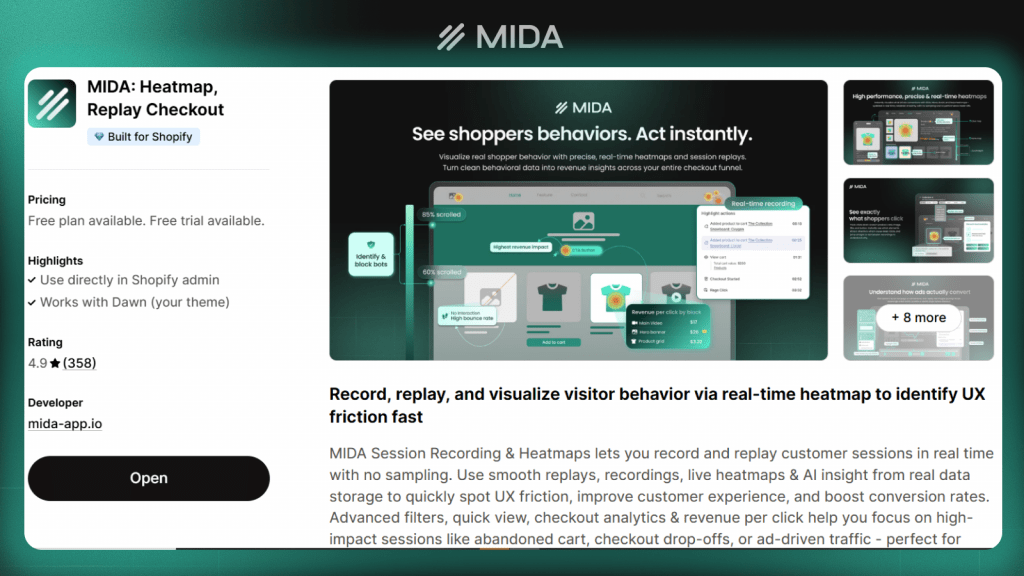
MIDA shows exactly where shoppers click, hesitate, or drop off. Because it’s Shopify-native, you get visibility into checkout pages, customer profiles, and the exact sessions behind abandoned carts and completed orders.
Before adding upsell pop-ups or redesigning your product page, watch what’s actually happening. You might find shoppers are confused by your shipping calculator or missing your size guide entirely.
2. Rebuy Personalization Engine
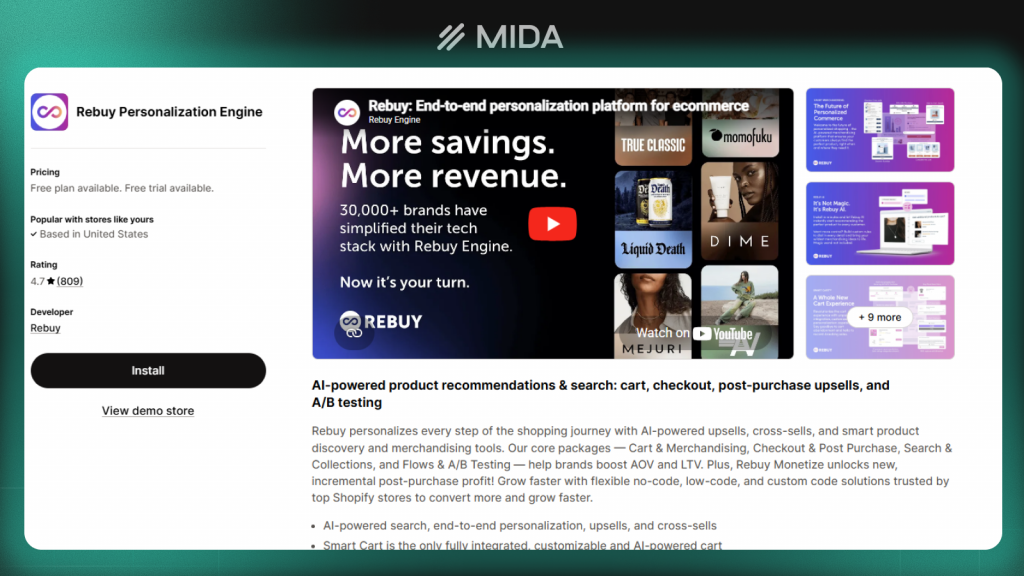
Rebuy delivers AI-powered product recommendations on product pages, in the cart, and at checkout. It analyzes cart contents and browsing history to suggest relevant upsells and bundles.
A shopper adding running shoes might see recommended socks or insoles. The suggestions appear at natural decision points without disrupting the buying flow.
3. Yotpo Product Reviews and UGC
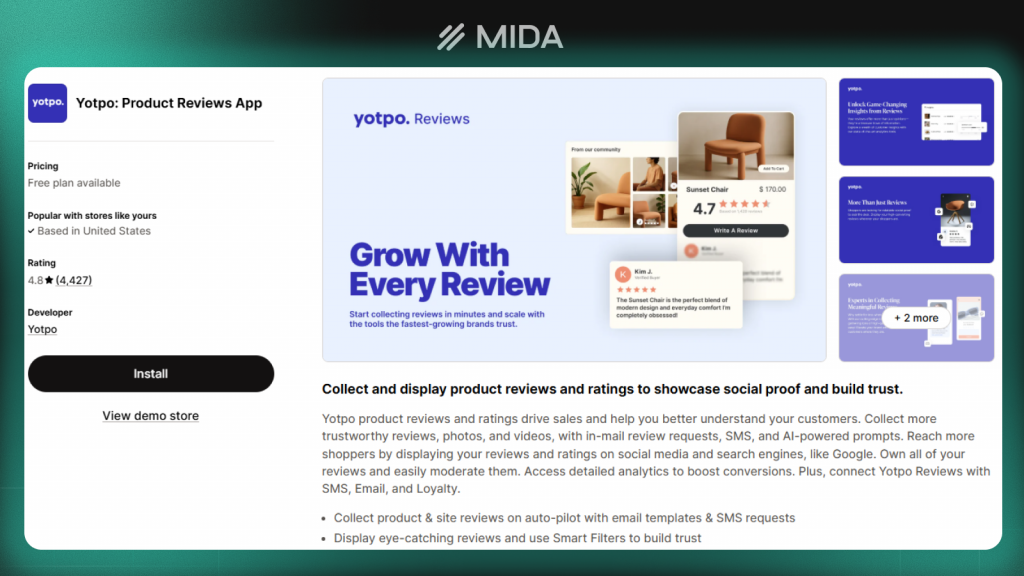
Reviews and user-generated content build trust in ways brand messaging can’t. 91% of consumers read reviews before purchasing, trusting other customers more than they trust you.
Displaying star ratings on product pages and in search results increases click-through rates and reduces purchase hesitation. Yotpo also collects photo and video reviews, which tend to perform better than text-only testimonials.
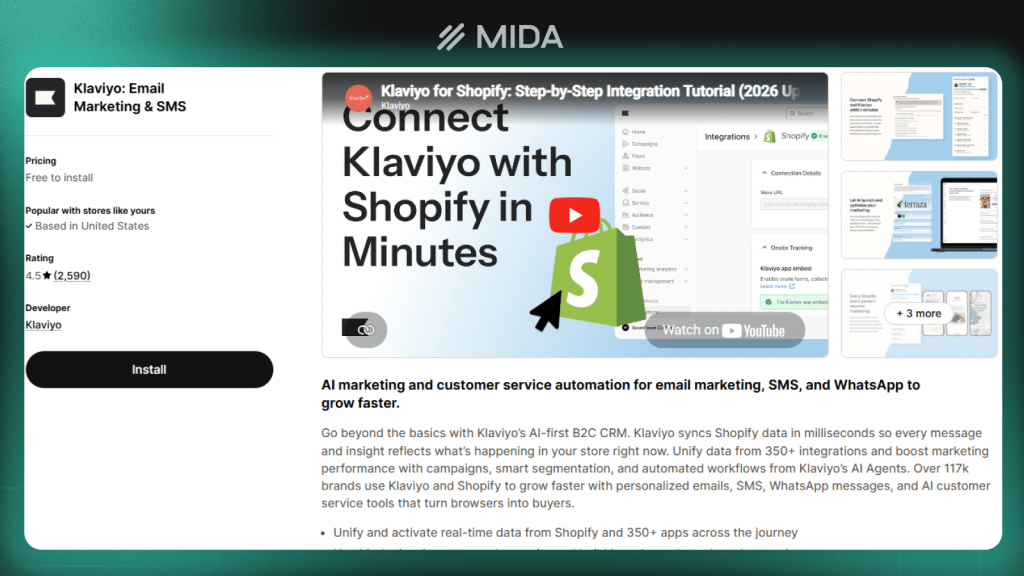
4. Klaviyo Email and SMS Marketing
Klaviyo handles automated abandoned cart recovery, post-purchase flows, and segmented campaigns. Its deep Shopify integration lets you trigger messages based on specific shopping behaviors rather than just page views.
You can send different recovery emails to first-time visitors versus returning customers, or segment by cart value and product category.
5. Privy Pop Ups and Email Capture
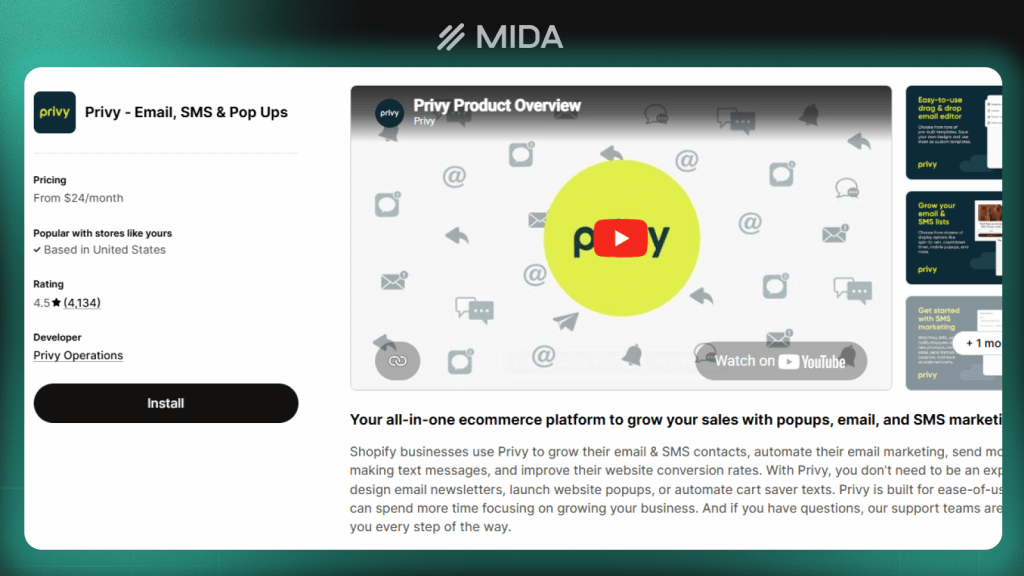
Privy captures emails with exit-intent pop-ups and welcome discounts. It converts first-time visitors into subscribers you can nurture into buyers over time.
A well-timed offer as someone moves to close the tab can recover an otherwise lost visitor.
6. Bold Upsell and Cross Sell
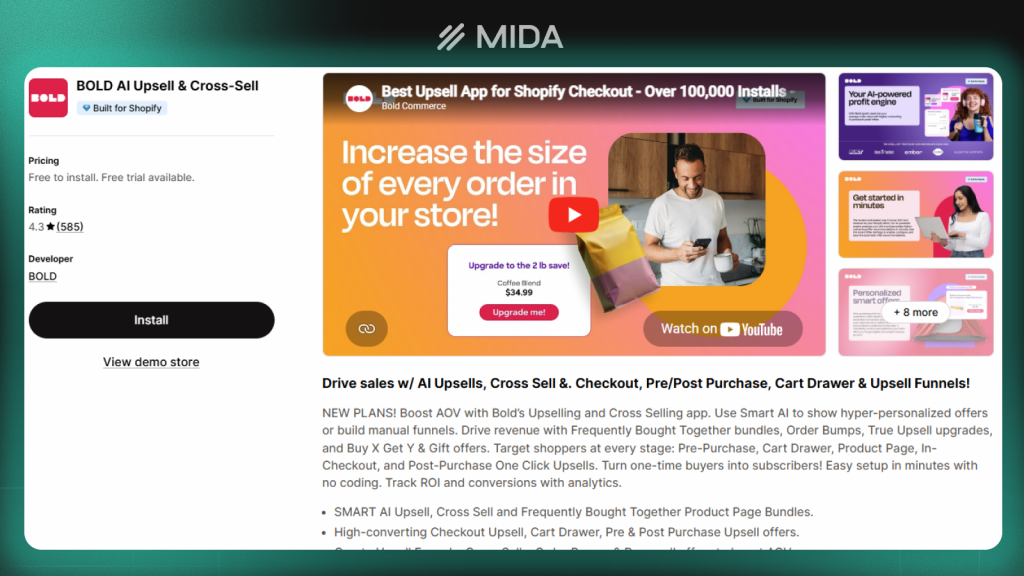
Bold presents upsell and cross-sell offers at add-to-cart or during checkout. Think of it as the digital equivalent of “would you like fries with that?” except the suggestions are based on what’s already in the cart.
7. Smile Rewards and Loyalty Program
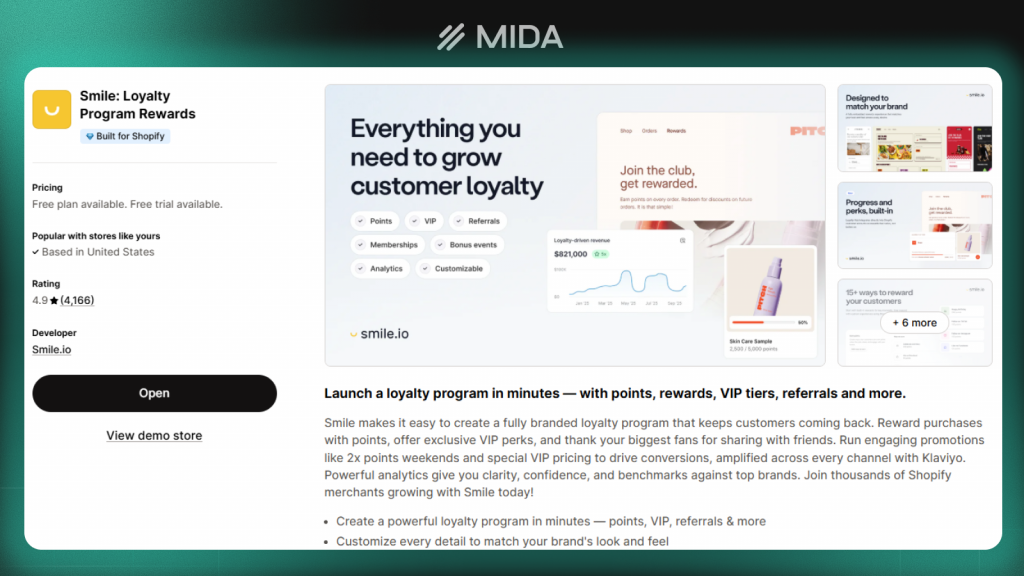
Loyalty programs incentivize repeat purchases through points, referrals, and VIP tiers. Smile makes it easy to set up a program without custom development.
Acquiring a new customer costs more than retaining an existing one, so loyalty programs can increase customer lifetime value.
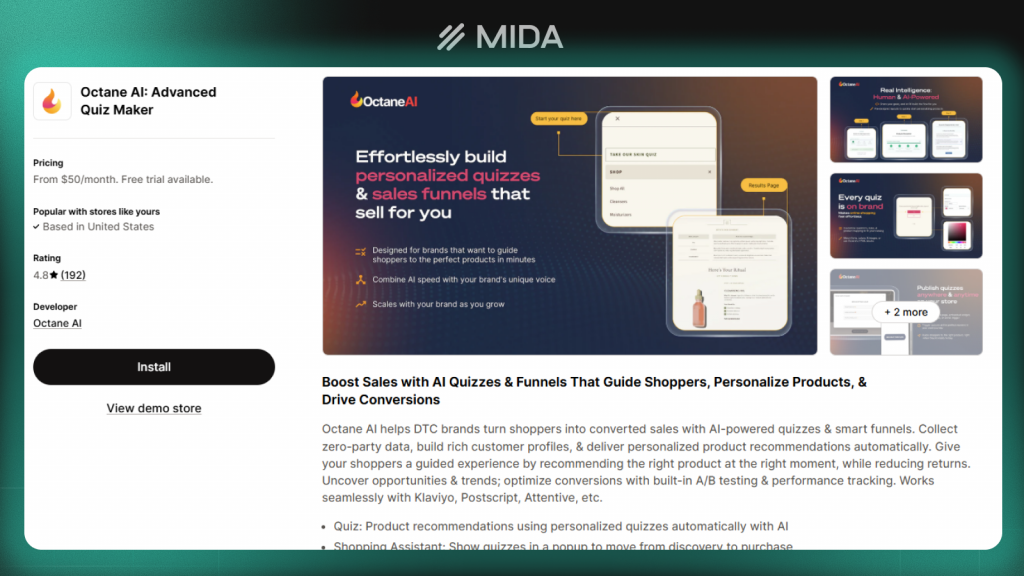
8. Octane AI Quiz Builder
Product quizzes guide shoppers to the right product based on their answers. This reduces choice paralysis, which is particularly useful for stores with large catalogs or products that require some expertise to choose.
Quizzes also collect zero-party data (information customers intentionally share), which you can use for personalization and email segmentation.
9. Loox Photo Reviews and Referrals
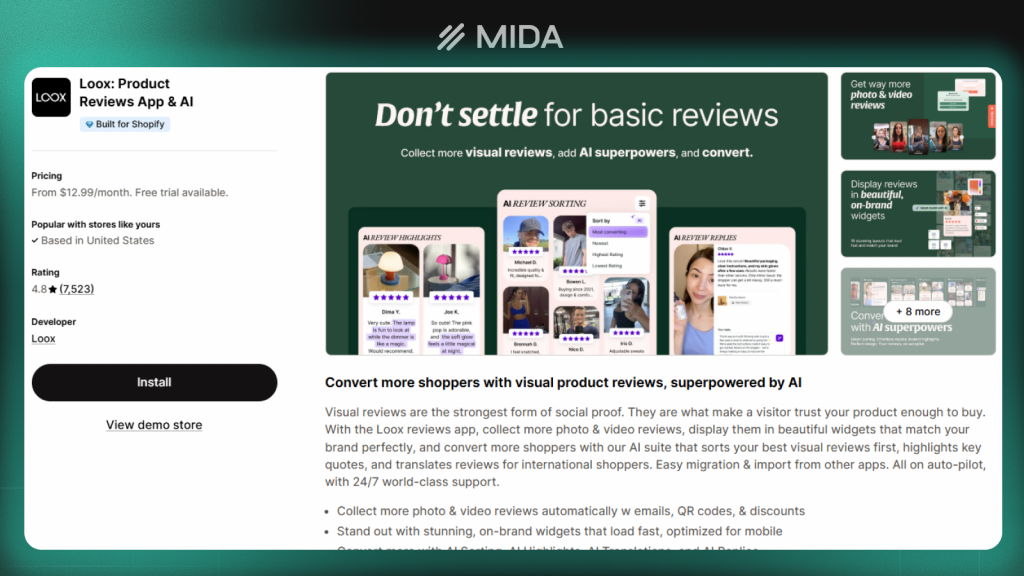
Loox automatically requests photo reviews after purchase. Visual social proof tends to be more persuasive than text-only reviews because shoppers can see the product in real-life contexts.
10. Tidio Live Chat and AI Chatbots
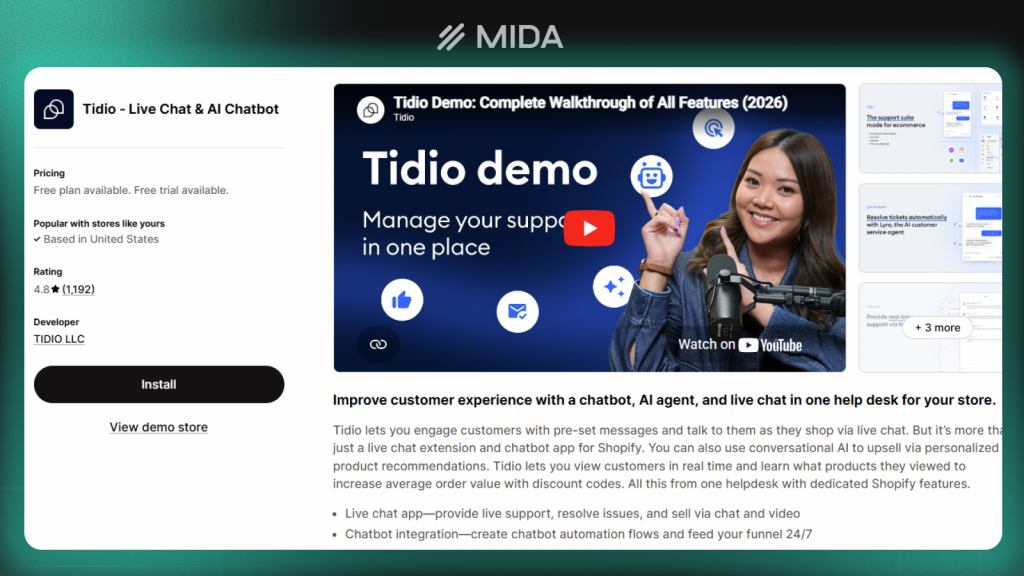
Tidio lets you answer shopper questions in real time or via automated responses. Pre-purchase objections like “Does this ship to Canada?” or “What’s your return policy?” often block conversions. Quick answers remove those objections.
11. Searchspring Site Search and Merchandising
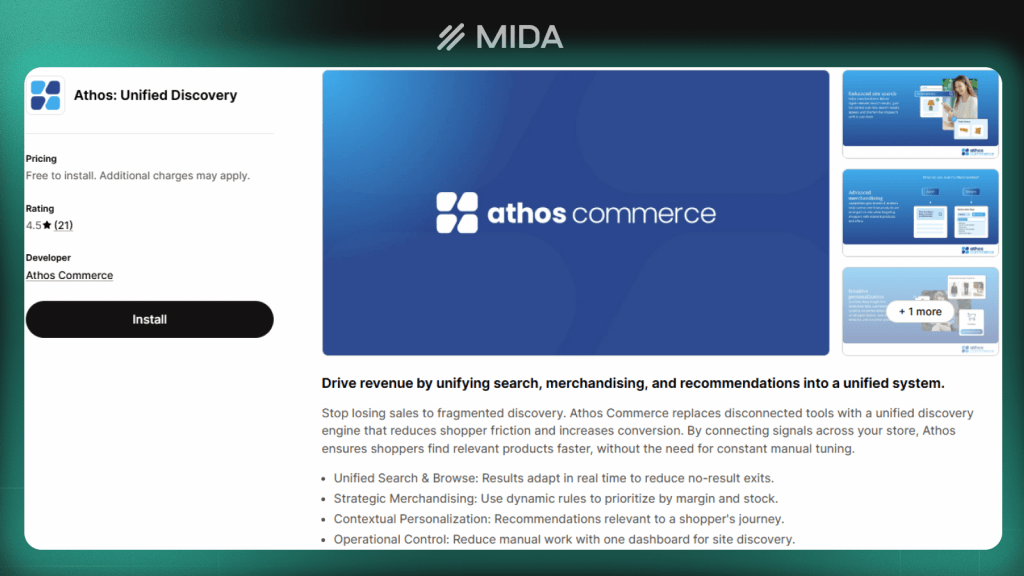
Smarter search helps shoppers find products faster. Searchspring (now Athos) includes autocomplete, filters, and merchandising rules to surface high-converting products. If shoppers can’t find what they’re looking for, they leave.
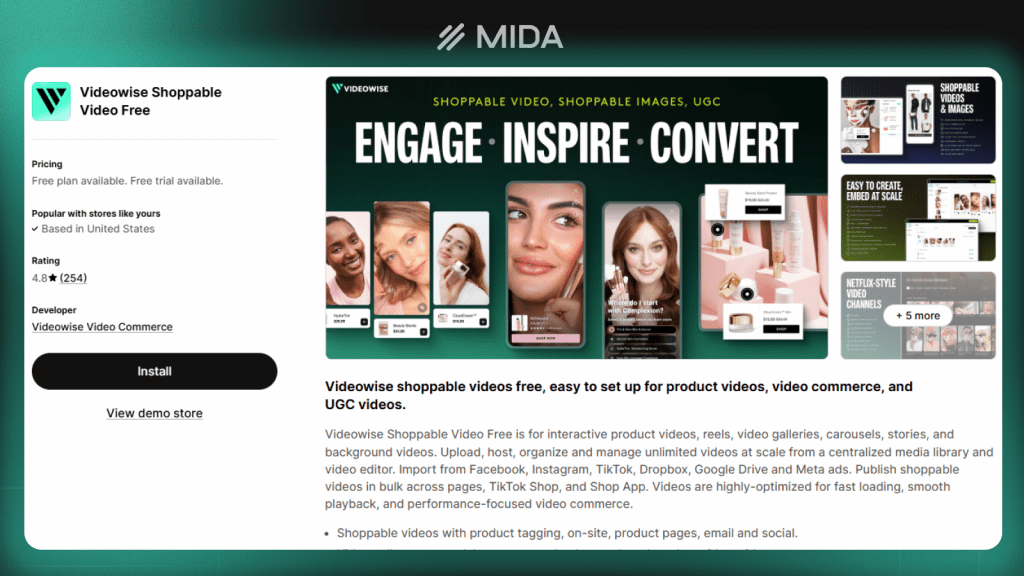
12. Videowise Shoppable Video
Videowise embeds shoppable videos on product pages. Video demonstrates products in action and keeps shoppers engaged longer than static images. For products that benefit from demonstration, like apparel, beauty, or home goods, video can reduce purchase hesitation.
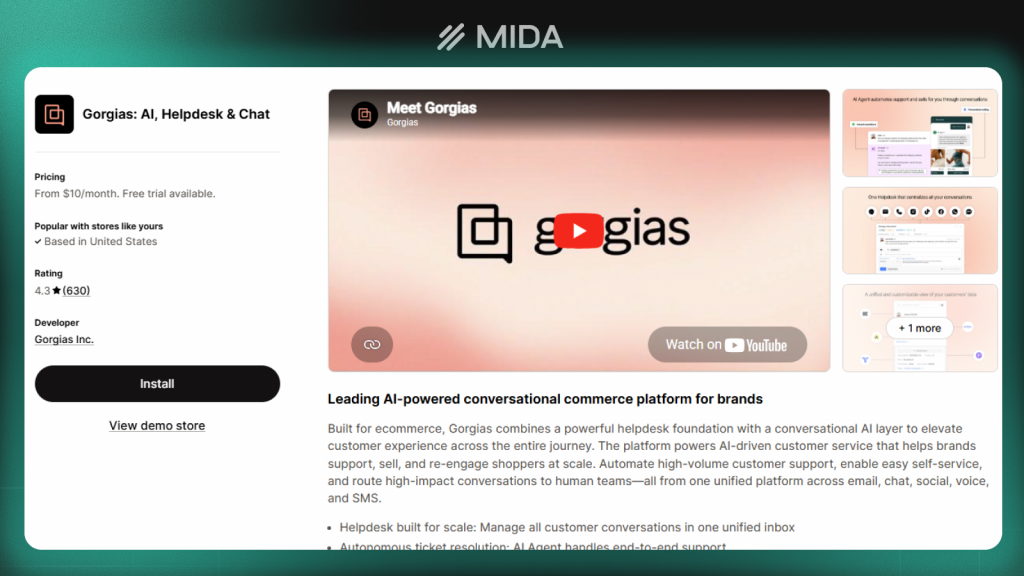
13. Gorgias Helpdesk and Customer Support
Gorgias centralizes support tickets and enables fast responses. When a shopper has a question and gets an immediate answer, they’re more likely to complete the purchase.
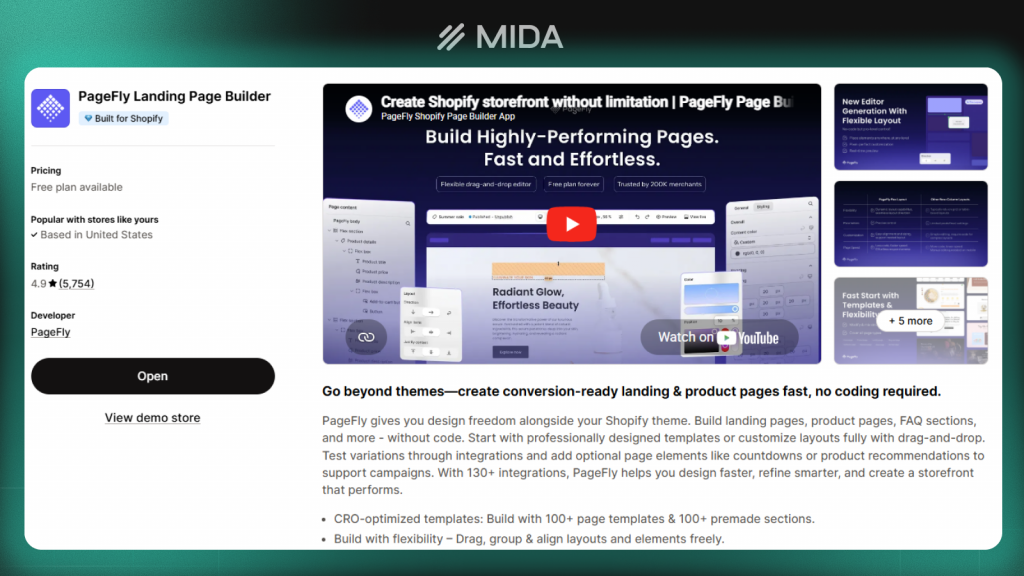
14. PageFly Landing Page Builder
PageFly lets you build custom landing pages for campaigns without developer help. A Facebook ad about a specific product line performs better when it lands on a page built specifically for that campaign rather than a generic collection page.
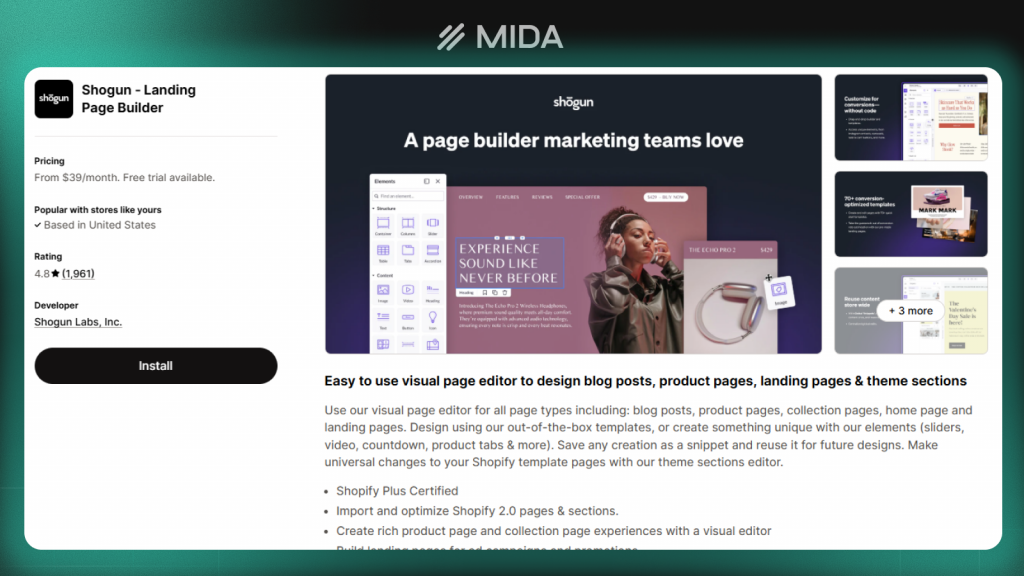
15. Shogun Visual Page Builder
Shogun provides drag-and-drop page building with A/B testing built in. You can customize product pages and test variations to see what actually improves conversions. The A/B testing capability lets you validate changes with data rather than assumptions.
CRO App Mistakes That Kill Conversions
Even good apps can hurt conversions when implemented poorly.
1. Adding Features Without Understanding the Problem
Installing upsell apps won’t help if the real issue is confusing navigation. Watch session replays of abandoned carts first. You might discover the problem is something no app can fix, like unclear product descriptions or missing size information.
2. Installing Too Many Apps at Once
App bloat slows your site and creates conflicting scripts. Each app adds JavaScript to your pages, and conversion rates drop 4.42% with each additional second of load time.
Add one app, measure its impact, then decide on the next.
3. Ignoring Mobile Conversion Behavior
Most Shopify traffic is mobile, but many stores only test on desktop. A pop-up that looks great on desktop might cover the entire screen on mobile, frustrating shoppers instead of converting them.
4. Skipping Baseline Metrics
Without a baseline, you can’t measure improvement. Calculate your conversion rate before installing a new app so you can compare. “It feels like conversions improved” isn’t data.
How to Measure If Your CRO Apps Are Working
Compare Conversion Rates Before and After
Use Shopify Analytics or Google Analytics to track conversion rate changes after installing an app. Give yourself enough time and traffic to see meaningful patterns. A few days usually isn’t enough.
Look at the specific metric the app targets. An upsell app might not change overall conversion rate, but it could increase average order value.
Watch Session Replays to Validate Changes
Session replay shows whether shoppers actually interact with new features as intended. You can watch sessions tied to abandoned carts versus completed orders to see what’s different.
Maybe your new pop-up is appearing at the wrong moment, or shoppers are dismissing it without reading. Replay reveals what analytics can’t.
Monitor Page Speed After Installation
Check Core Web Vitals using PageSpeed Insights or Shopify’s Online Store Speed report after installing any app. If speed drops significantly, reconsider whether the app is worth the tradeoff.
See What Blocks Your Conversions Before You Fix Them
The apps in this list solve real problems, but only if you’re solving the right problems for your store. Before adding features, see exactly where shoppers hesitate, get confused, or drop off.
MIDA lets you watch real shopper sessions, connect behavior to abandoned carts and orders, and prioritize fixes based on what’s actually happening. When you can see the friction, you know what to fix first.
FAQs about Shopify Conversion Rate Apps
What is a good conversion rate for a Shopify store?
Conversion rates vary widely by industry, product type, and traffic source. Focus on improving your own baseline rather than chasing a universal benchmark.
Do Shopify apps slow down my store?
Poorly coded or excessive apps can impact page speed, which directly hurts conversions. Test your site speed after each installation and remove apps that hurt performance more than they help.
Which Shopify theme converts the best?
Theme matters less than page speed, clear navigation, and trust signals. Any fast, mobile-optimized theme can convert well with the right optimization.
How many conversion apps should I install on a Shopify store?
There’s no magic number. Install only what solves a specific, diagnosed problem and measure each app’s impact before adding another.

Hien Tran
I’m Hien Tran, a Product Marketing Executive at MIDA, specializing in eCommerce growth and conversion optimization. I focus on bridging product capabilities with real merchant needs—turning insights from heatmaps, session replays, and funnel analytics into actionable strategies that drive measurable results.


