12 Best Enterprise CRO Platforms for 2026: Complete Buyer’s Guide
Enterprise CRO platforms are technology systems that help large organizations increase revenue by optimizing how visitors convert into customers—combining experimentation, behavioral analytics, and personalization at scale. The category has expanded significantly, with platforms now ranging from pure A/B testing tools to full behavior analytics suites that tie every click to revenue outcomes.
This guide compares 12 leading enterprise CRO platforms for 2026, breaks down what separates enterprise-ready tools from SMB solutions, and walks through how to evaluate, justify, and implement the right platform for your business.
What are enterprise CRO platforms
Enterprise CRO platforms are scalable technology systems that help large organizations increase revenue by optimizing how visitors convert into customers. Unlike basic analytics tools that simply report what happened, enterprise CRO platforms combine experimentation, behavioral insights, and personalization to reveal why conversions happen—or don’t.
Picture a retailer testing checkout layouts across millions of sessions while simultaneously personalizing product recommendations based on real-time shopper behavior. That’s the coordinated optimization enterprise CRO platforms enable. The category includes tools like Optimizely for experimentation, Contentsquare for journey analytics, and MIDA for Shopify-native behavior analytics tied directly to revenue.
The “enterprise” distinction matters. Enterprise platforms handle higher traffic volumes, meet stricter security requirements, and support larger teams than tools built for smaller operations.
What defines enterprise-ready CRO software
Not every CRO tool qualifies as enterprise-ready. Five capabilities separate enterprise platforms from tools built for smaller teams.
Advanced experimentation and personalization
Enterprise platforms support testing beyond simple A/B comparisons. Multivariate testing (MVT) lets you test multiple element variations simultaneously—three headlines combined with four button colors, for example—to find the optimal combination. AI-driven personalization goes further by automatically serving different experiences to different audience segments based on behavioral signals.
Deep commerce platform integrations
Your CRO platform works best when it speaks the same language as your commerce stack. For Shopify stores, native integrations pull order data, customer profiles, and cart values directly into your analytics. Shopify-native tools access checkout and order-level data that platform-agnostic tools cannot reach.
Enterprise security and compliance
Large organizations face strict requirements around data handling. Look for platforms that meet GDPR, CCPA, and SOC2 standards. Key questions to ask vendors: Where is data stored? How is personally identifiable information handled?
Scalable user behavior analytics
Behavior analytics—session replay, heatmaps, funnel analysis—form the diagnostic backbone of CRO. For enterprises, behavior analytics tools handle high traffic volumes without degrading site performance or sampling data so heavily that insights become unreliable.
Team collaboration and workflow management
Enterprise CRO involves multiple stakeholders: marketers, developers, analysts, and executives. Role-based access controls, shared views, tagging systems, and collaborative reporting features keep everyone aligned without creating security risks.
Best enterprise CRO platforms compared
| Platform | Best For | Key Strength | Price Tier |
|---|---|---|---|
| MIDA | Shopify e-commerce | Revenue-linked behavior analytics | Mid-market |
| Optimizely | Large experimentation programs | Mature A/B testing framework | Enterprise |
| Adobe Target | Adobe ecosystem users | Deep personalization | Enterprise |
| VWO | Accessible experimentation | Managed services options | Mid-market |
| Dynamic Yield | Omnichannel retail | Real-time personalization | Enterprise |
| Contentsquare | Deep journey analytics | AI-powered insights | Enterprise |
| AB Tasty | Marketer-friendly testing | Strong GDPR compliance | Mid-market |
| Kameleoon | AI-driven personalization | Privacy-first architecture | Enterprise |
| FullStory | Digital experience intelligence | Automatic event capture | Enterprise |
| Hotjar | SMBs and entry-level teams | Ease of use | Freemium |
| Heap | Product analytics | Autocapture technology | Mid-market |
| Convert | Privacy-focused testing | Strict compliance | Mid-market |
MIDA
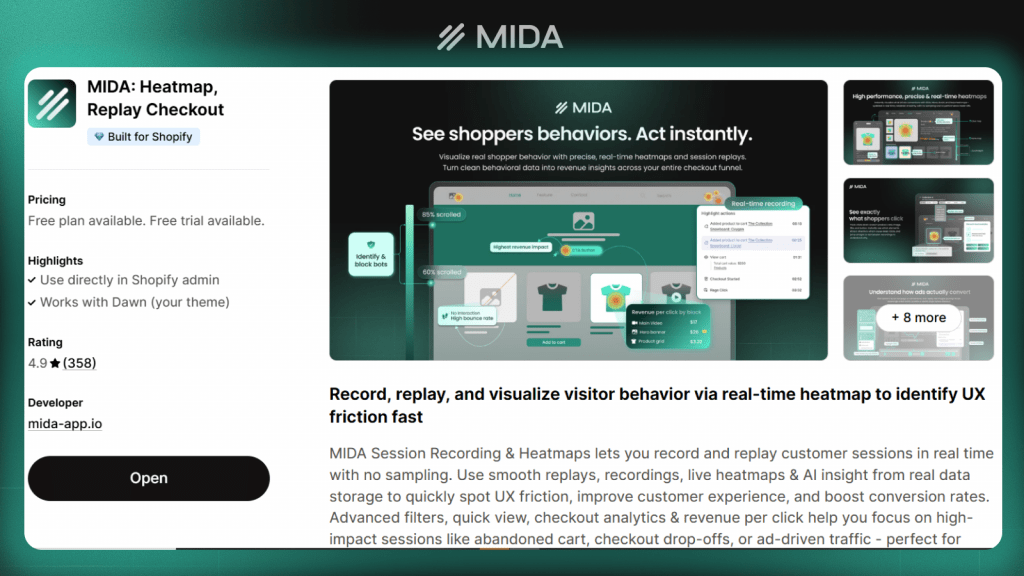
MIDA is the Shopify-native enterprise CRO platform that connects user behavior directly to revenue outcomes. Built exclusively for Shopify, MIDA offers checkout-level visibility that platform-agnostic tools cannot match.
Overview
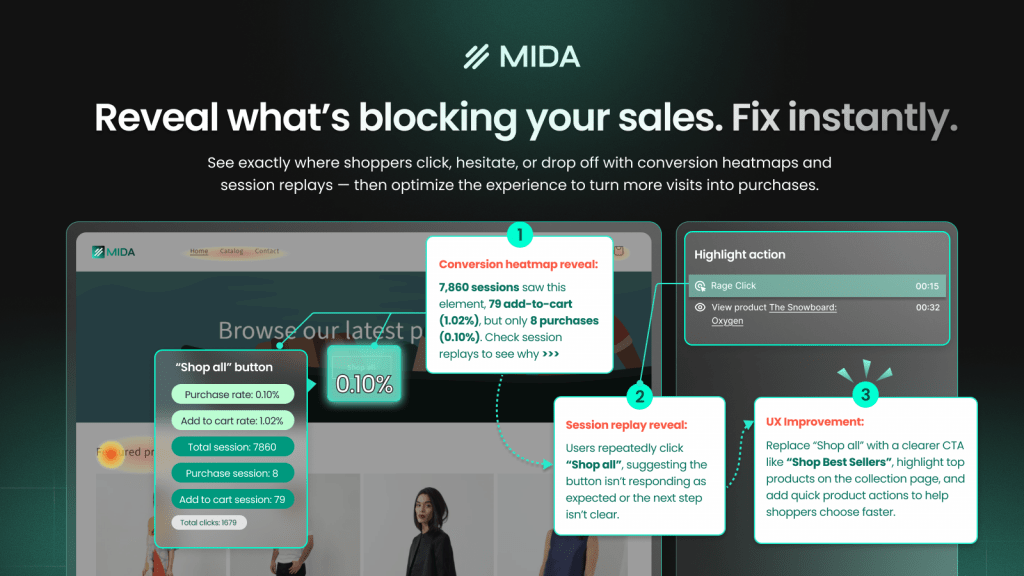
MIDA combines session replay, heatmaps, analytics, surveys, and fraud filtering in one integrated suite. The platform’s unique advantage lies in tying sessions directly to Shopify orders and customer profiles—you can jump from any order or abandoned cart directly to the session replay showing exactly what happened.
Key features
- Revenue-linked heatmaps: See which clicks drive add-to-cart and purchases, not just general activity
- Advanced checkout recording: Capture friction at shipping, payment, and form fields where other tools cannot record
- Order-level session replay: Jump directly to the session behind any specific order or abandoned cart
- On-site surveys linked to recordings: Connect what shoppers say to what they actually do
Pros and cons
MIDA’s Shopify-native depth and direct revenue attribution make it powerful for e-commerce teams. However, the platform works only with Shopify stores.
Pricing
MIDA offers tiered pricing with a free trial available via the Shopify App Store.
Optimizely
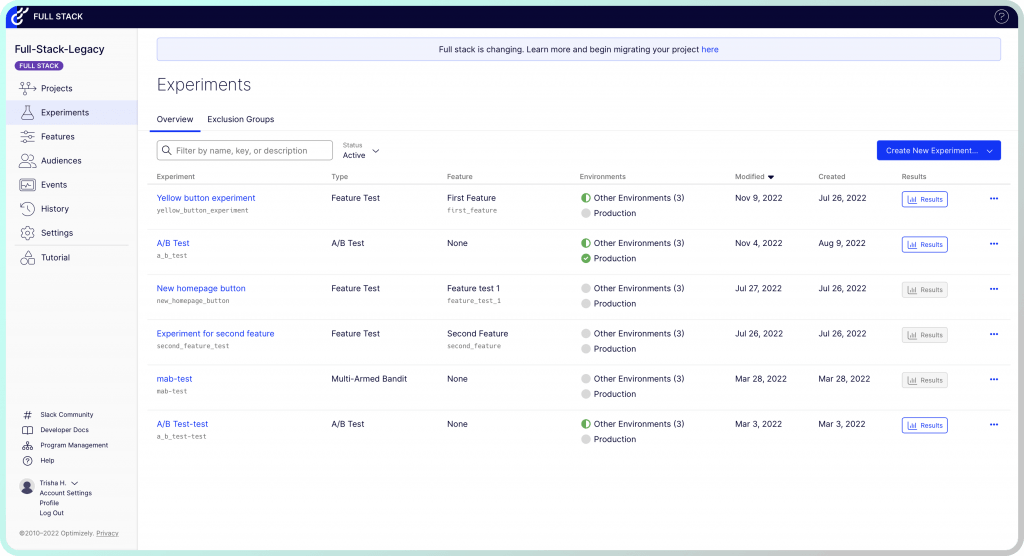
Optimizely is the mature experimentation platform for enterprises running large-scale A/B testing programs across web, mobile, and server-side environments.
Overview
Optimizely provides a full-stack experimentation framework with strong statistical rigor. The platform suits organizations with dedicated experimentation teams and technical resources.
Key features
Feature flagging, server-side experiments, a robust statistical engine, and content management integration make Optimizely a comprehensive testing platform.
Pros and cons
Optimizely’s experimentation framework and statistical engine are industry-leading. On the other hand, the platform has a steep learning curve, requires technical resources, and offers limited behavior analytics.
Pricing
Enterprise-tier pricing with custom quotes. No self-serve option for the full platform.
Adobe Target
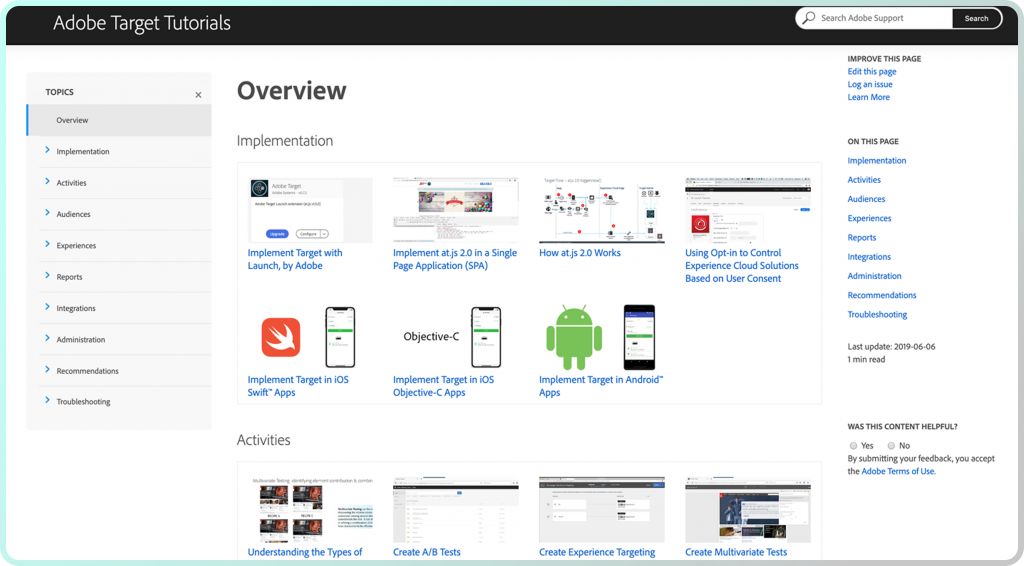
Adobe Target serves as the enterprise personalization engine for organizations already invested in the Adobe ecosystem.
Overview
Part of the Adobe Experience Cloud, Adobe Target focuses on AI-driven personalization and testing powered by Adobe Sensei.
Key features
Automated personalization, deep integration with Adobe Analytics and AEM, and sophisticated audience targeting capabilities define Adobe Target.
Pros and cons
Adobe Target offers powerful personalization and deep Adobe integration. However, the platform requires Adobe ecosystem investment and involves complex implementation.
Pricing
Enterprise-only, typically bundled with Adobe Experience Cloud.
VWO
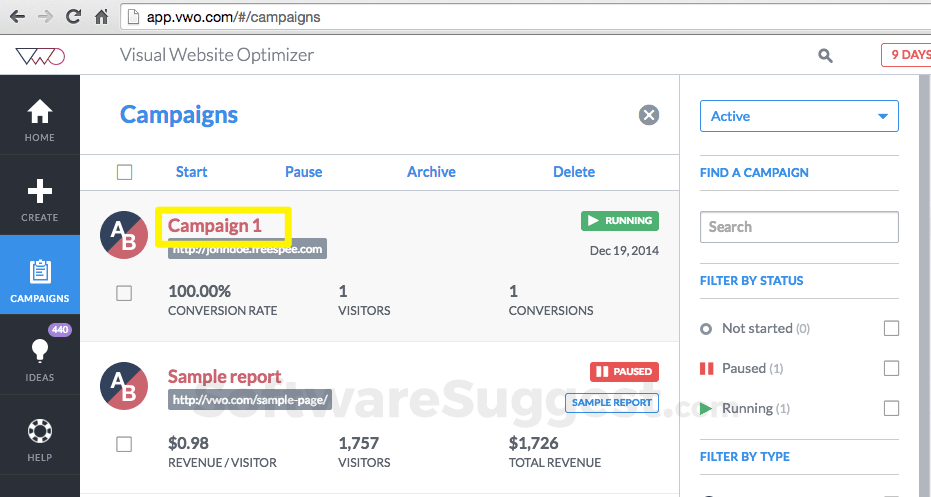
VWO offers accessible enterprise experimentation with the option of managed services for teams that want expert support.
Overview
VWO combines A/B testing, heatmaps, session recordings, and surveys in one platform. The managed services option makes VWO attractive for teams without dedicated CRO specialists.
Key features
A visual editor for non-technical users, server-side testing for developers, behavior analytics, and optional managed testing services.
Pros and cons
VWO is easier to use than Optimizely and includes behavior analytics. The platform is less robust for complex experimentation, and analytics are not as deep as specialized tools.
Pricing
Tiered pricing from growth to enterprise, with custom quotes for enterprise features.
Dynamic Yield
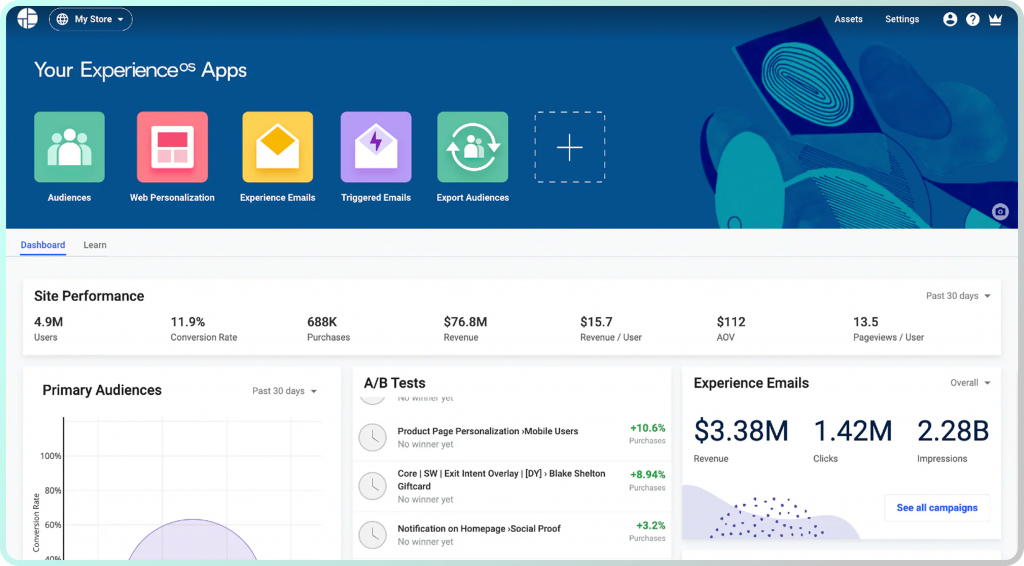
Dynamic Yield, now part of Mastercard, specializes in real-time personalization across omnichannel retail environments.
Overview
The platform orchestrates personalized experiences across web, mobile, email, and in-store channels—making Dynamic Yield particularly valuable for retailers with physical locations.
Key features
Recommendation engine, triggered messaging, Experience OS, and omnichannel orchestration.
Pros and cons
Dynamic Yield offers strong personalization and omnichannel focus. The platform places less emphasis on experimentation and offers enterprise pricing only.
Pricing
Enterprise pricing with custom quotes based on traffic and channels.
Contentsquare
Contentsquare provides deep digital experience analytics for understanding customer journeys at scale.

Overview
The platform combines session replay, zone-based heatmaps, and journey analytics with AI-powered insights. Contentsquare excels at surfacing friction points across complex user flows.
Key features
Zone-based heatmaps, journey analysis, frustration scoring, AI insights, and revenue attribution.
Pros and cons
Contentsquare offers deep analytics and strong enterprise features. The platform has a high price point, involves complex implementation, and lacks native A/B testing.
Pricing
Enterprise pricing only, with custom quotes.
AB Tasty
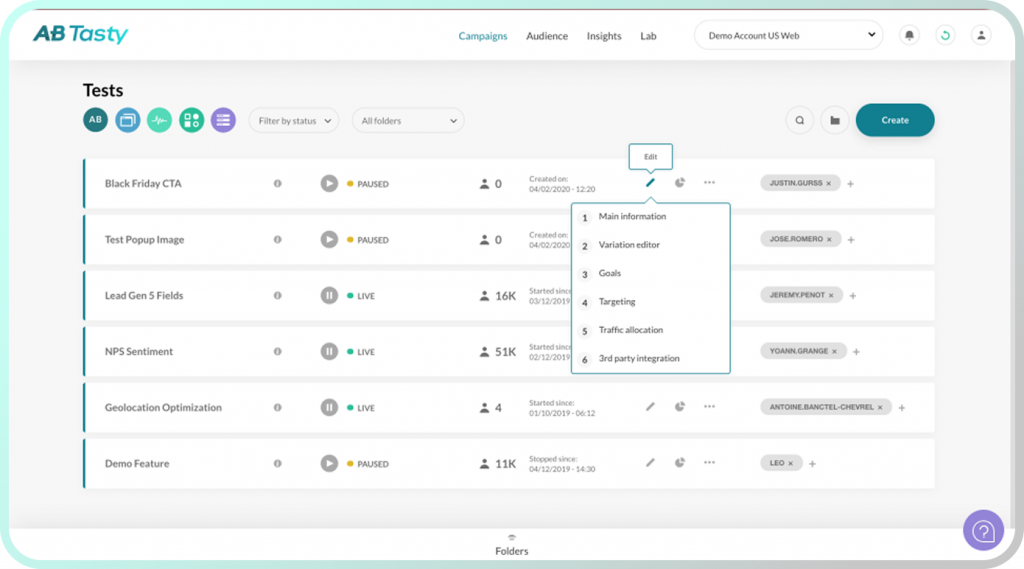
AB Tasty is the European-headquartered experimentation platform with strong GDPR compliance and marketer-friendly interfaces.
Overview
The platform offers A/B testing, personalization, and feature flagging with a focus on accessibility for non-technical users.
Key features
Visual editor, AI-powered targeting, feature experimentation, and emoji-based feedback widgets.
Pros and cons
AB Tasty is easy to use, has a strong European presence, and offers good compliance. Analytics are less robust than specialized tools.
Pricing
Tiered pricing with enterprise options.
Kameleoon
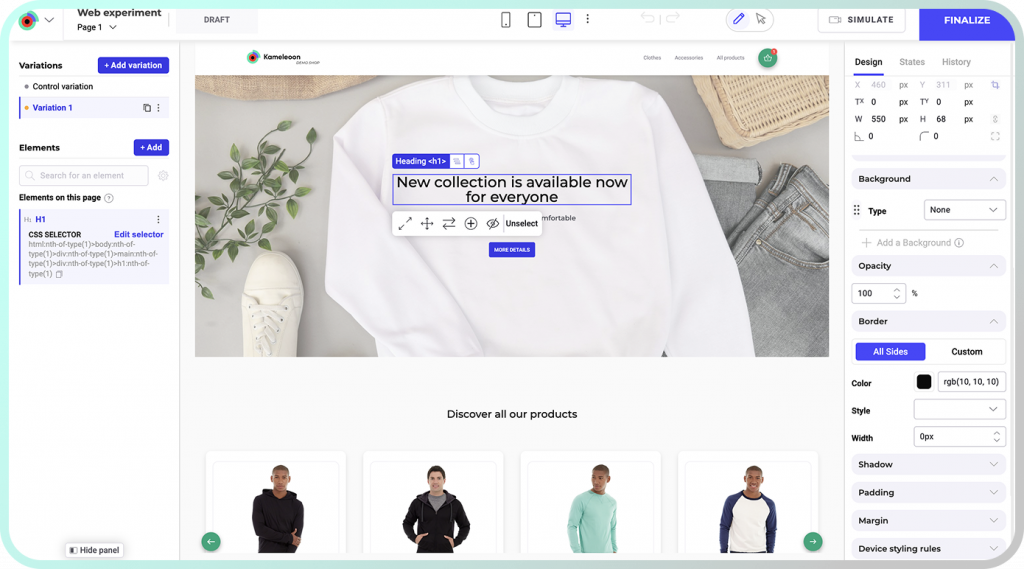
Kameleoon combines AI-driven experimentation with a privacy-first architecture designed for compliance-conscious enterprises.
Overview
The platform offers A/B testing and AI personalization with server-side capabilities, making Kameleoon suitable for high-traffic environments with strict privacy requirements.
Key features
AI-powered targeting, server-side testing, feature flags, and GDPR-compliant by design.
Pros and cons
Kameleoon has strong AI capabilities and a privacy focus. The platform has a smaller market presence and fewer integrations than larger competitors.
Pricing
Custom enterprise pricing.
FullStory
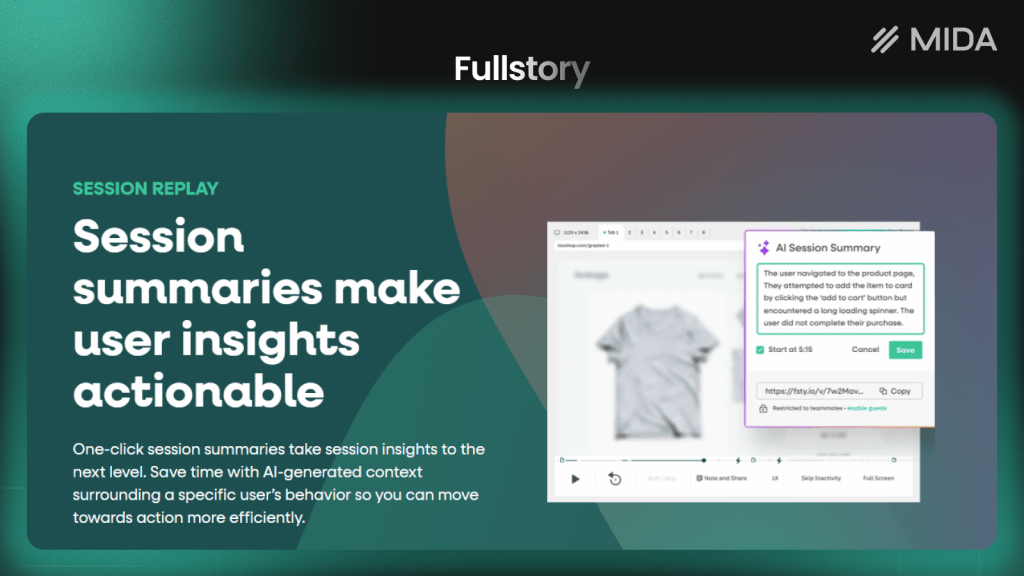
FullStory provides digital experience intelligence by combining session replay with product analytics and automatic event capture.
Overview
The platform automatically captures user interactions without manual tagging, making it easier to analyze behavior retroactively.
Key features
Auto-capture technology, frustration signals (rage clicks, dead clicks), search-based session finding, and product analytics.
Pros and cons
FullStory offers powerful search and automatic event capture. The platform lacks native A/B testing, can be expensive at scale, and is not e-commerce-specific.
Pricing
Tiered pricing from business to enterprise with custom quotes for high volume.
Hotjar
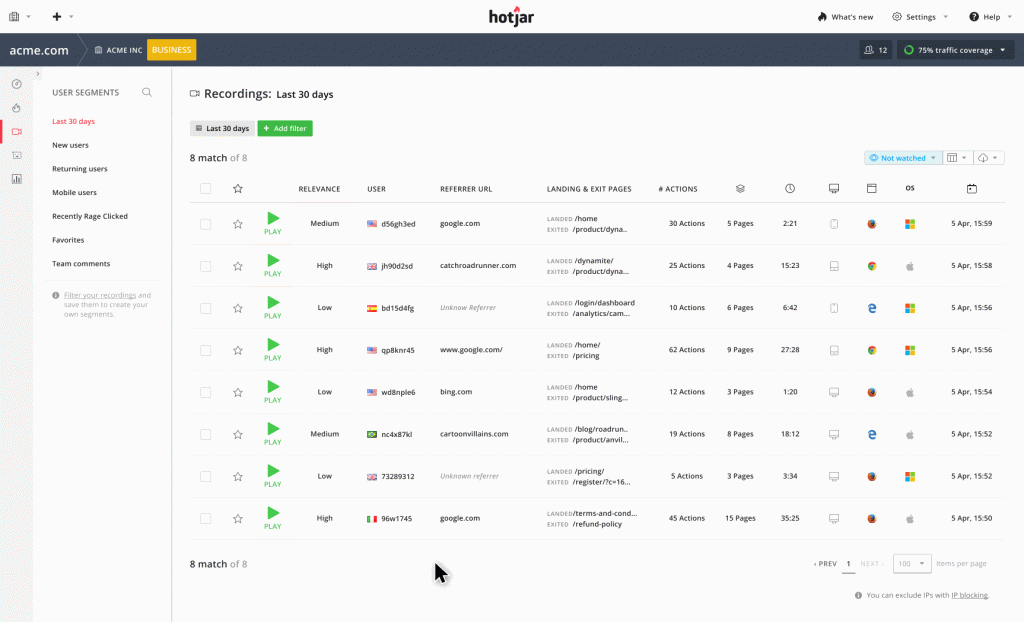
Hotjar serves as an accessible entry point to behavior analytics, often used before teams graduate to enterprise platforms.
Overview
The platform offers heatmaps, session recordings, and surveys with an intuitive interface that requires minimal technical setup.
Key features
Heatmaps, session recordings, feedback widgets, surveys, and user interviews.
Pros and cons
Hotjar offers easy setup and an affordable entry point. The platform has limited enterprise features, no revenue attribution, and samples data at high volumes.
Pricing
Freemium model with paid tiers. Enterprise plans available.
Heap
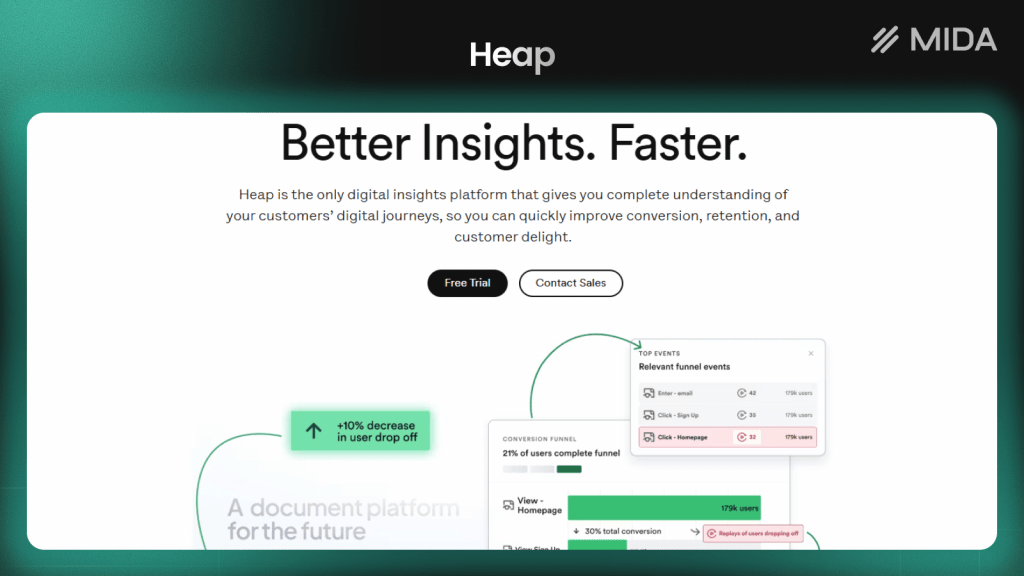
Heap is the product analytics platform that automatically captures all user interactions without manual event tagging.
Overview
Heap’s autocapture technology means you can analyze behavior retroactively—even for events you didn’t think to track initially.
Key features
Autocapture, retroactive analytics, session replay, funnel analysis, and cohort analysis.
Pros and cons
Heap requires no manual tagging and enables retroactive analysis. The platform focuses on product analytics rather than CRO and offers limited personalization.
Pricing
Free tier available. Growth and enterprise tiers with custom pricing.
Convert
Convert is the privacy-focused A/B testing platform for enterprises with strict compliance requirements.
Overview
The platform emphasizes privacy compliance and flicker-free testing, making Convert suitable for organizations in regulated industries.
Key features
No personal data storage, GDPR/CCPA compliant by default, flicker-free deployment, and deep integrations.
Pros and cons
Convert has a strong privacy stance and fast performance. The platform lacks behavior analytics and has a narrower feature set than full CRO suites.
Pricing
Transparent pricing tiers based on number of tested users.
How to choose the right enterprise CRO platform
Choosing the wrong platform wastes budget and delays optimization results. A structured evaluation framework helps you avoid costly mistakes.
Define your primary optimization goals
Start by asking: Are you focused on experimentation, behavior analytics, personalization, or all three? Platforms like Optimizely excel at testing while Contentsquare leads in analytics. MIDA combines behavior analytics with revenue attribution for Shopify stores specifically.
Map your integration requirements
List every platform and tool your CRO software connects with—e-commerce platform, CRM, analytics tools, data warehouse. Shopify stores benefit significantly from Shopify-native tools that access checkout and order data directly.
Evaluate security and compliance needs
Consider GDPR, CCPA, SOC2, and any industry-specific requirements. Ask vendors directly: Where is data stored? How is PII handled?
Assess team size and collaboration needs
Consider who will use the platform daily—marketers, developers, analysts—and what collaboration features they require. Role-based access, shared views, and tagging systems become essential as teams grow.
Calculate total cost of ownership
Look beyond the license fee. Include implementation costs, training time, and ongoing management overhead. A cheaper platform that requires dedicated technical resources may cost more than a pricier tool that marketers can operate independently.
How to justify enterprise CRO platform spend
Building a business case for CRO investment requires connecting platform capabilities to revenue outcomes.
- Revenue impact modeling: Estimate potential conversion lift based on your current baseline. Even a 0.5% improvement on high-traffic pages can represent significant revenue.
- Cost of inaction: Quantify the revenue currently lost to friction and abandonment. Tools that link behavior directly to revenue—like MIDA’s order-level replay—make this calculation concrete.
- Pilot-scale-optimize approach: Start with a focused pilot on high-impact pages before committing to full deployment.
How to implement an enterprise CRO platform
Your implementation approach determines whether you see results in weeks or months.
1. Audit your current optimization stack
Inventory existing tools to identify gaps and overlaps. Decide what to replace versus integrate.
2. Define success metrics and baselines
Establish current conversion rates, revenue per visitor, and abandonment rates before implementation. Without baselines, you cannot measure impact.
3. Run a pilot on high-impact pages
Start with checkout, product pages, or landing pages with the highest traffic and revenue potential. Proving value quickly builds organizational momentum.
4. Scale to full deployment
Once the pilot demonstrates results, expand to additional pages and use cases systematically.
5. Establish continuous optimization workflows
Create recurring review cadences and assign clear ownership for monitoring insights and acting on findings. CRO is an ongoing practice, not a one-time project.
Choose the right platform for your store
The best enterprise CRO platform connects behavior insights to revenue outcomes. For Shopify merchants specifically, the value lies in native integrations that surface what happens before every order, abandoned checkout, and abandoned cart.
Frequently asked questions about enterprise CRO platforms
What is the difference between enterprise and SMB CRO platforms?
Enterprise platforms offer higher traffic limits, advanced security compliance (SOC2, GDPR), role-based access controls, dedicated support, and deeper integrations with enterprise tech stacks. SMB tools typically sample data at high volumes and lack the governance features large organizations require.
How long does enterprise CRO platform implementation take?
Implementation timelines range from a few days for Shopify-native tools like MIDA to several months for complex platforms like Adobe Target that require significant technical resources and ecosystem integration.
Can enterprise CRO platforms integrate with headless commerce architectures?
Most enterprise CRO platforms support headless commerce through APIs and server-side implementations, though integration depth varies. Shopify-native tools maintain full functionality even with headless storefronts that use Shopify’s backend.
Do enterprise CRO platforms support checkout page optimization?
Support varies significantly. Some platforms cannot record checkout pages due to security restrictions, while Shopify-native tools like MIDA offer advanced checkout recording that captures friction at shipping, payment, and form fields.

Hien Tran
I’m Hien Tran, a Product Marketing Executive at MIDA, specializing in eCommerce growth and conversion optimization. I focus on bridging product capabilities with real merchant needs—turning insights from heatmaps, session replays, and funnel analytics into actionable strategies that drive measurable results.


