How to Increase Average Order Value: 25 Proven Strategies for 2026
Getting more customers through the door is expensive. Getting each customer to spend more per order is where the real leverage lives.
This guide covers how to calculate AOV, what benchmarks actually matter for your store, how to diagnose the specific friction points holding your numbers down, and 25 tactics to increase what customers spend each time they buy.
What is average order value in ecommerce
Average order value (AOV) is the average dollar amount customers spend per transaction in your store. To increase AOV, you can implement product bundles, set free shipping thresholds slightly above your current AOV, add targeted upsells and cross-sells, offer volume discounts, and use AI-powered personalized recommendations.
Picture a customer who visits your store planning to buy a single $40 moisturizer. With the right AOV tactics in place, that same customer leaves with a $75 skincare bundle instead. The gap between those two outcomes is what AOV optimization captures.
In marketing, AOV helps you understand purchasing behavior beyond conversion rates alone. A store converting 3% of visitorsIn marketing, AOV helps you understand purchasing behavior beyond conversion rates alone. A store converting 3% of visitors at $50 AOV generates very different revenue than one converting 3% at $120 AOV—even though the conversion percentage looks identical.
How to calculate average order value
The AOV formula
Average Order Value = Total Revenue ÷ Number of Orders
- Total Revenue: The sum of all order values during your measurement period
- Number of Orders: The total completed transactions in that same period
A worked calculation example
Say your store generated $45,000 in revenue from 600 orders last month. Divide $45,000 by 600 to get $75. Your AOV is $75.
This baseline becomes useful when you track it over time and segment it by device, traffic source, and customer type.
Why average order value matters for your business
Higher AOV means more revenue without acquiring new customers. When you increase what each customer spends per transaction, you extract more value from traffic you’ve already paid to attract.
- Reduces reliance on new customer acquisition: You grow revenue from existing traffic
- Improves profitability per transaction: Fixed costs like shipping spread across larger orders
- Increases customer lifetime value: Customers who buy more per order often become higher-value long-term customers
- Maximizes marketing spend efficiency: Your cost per acquisition effectively drops when each acquired customer spends more
What is a good average order value
A “good” AOV depends on your industry, product type, and business model. What matters is whether your AOV is improving over time and how it compares to stores similar to yours.
AOV benchmarks by industry
Different product categories naturally command different order values.
| Industry | Typical AOV Range | Why |
|---|---|---|
| Fashion & Apparel | $80–$150 | Multiple items per outfit |
| Beauty & Skincare | $50–$90 | Bundled routines |
| Electronics | $150–$300+ | Higher unit prices |
| Home & Furniture | $200–$500+ | Large-ticket items |
| Food & Beverage | $30–$60 | Frequent, smaller purchases |
AOV benchmarks by device type
Desktop shoppers typically show higher AOV than mobile users. The gap exists because desktop browsing makes comparison shopping easier and checkout less friction-prone.
AOV benchmarks by traffic source
Organic search, email, and direct traffic often produce different AOV patterns than paid social. Email subscribers who already know your brand tend to buy more confidently, while paid social traffic often converts at lower AOV because those shoppers are earlier in their buying journey.
Common causes of low AOV
Before jumping to tactics, it helps to understand what typically holds AOV down.
Weak or missing upsell and cross-sell offers
Stores without product recommendations leave money on the table. A customer buys a camera but sees no lens, bag, or memory card suggestion—that’s missed revenue from someone already in buying mode.
No free shipping threshold
Offering free shipping without a minimum purchase removes the incentive for customers to add more items. Setting a threshold slightly above your current AOV motivates larger carts.
Poor product page design
Confusing layouts, missing product details, or buried add-to-cart buttons prevent higher-value purchases.
Checkout friction and unexpected costs
Surprise fees, complex forms, or slow checkout processesSurprise fees, complex forms, or slow checkout processes cause abandonment before customers have a chance to add more items.
Lack of product bundles
Without bundled offers, customers default to buying single items instead of complementary sets.
Missing personalization
Generic shopping experiences fail to surface relevant, higher-value products to individual shoppers.
How to diagnose why your AOV is low
Finding the specific causes in your store requires looking at actual shopper behavior.
Analyze your checkout funnel for drop-off points
Funnel visualization shows exactly where shoppers exit between key steps: product view → add to cart → checkout initiated → purchase complete. A big drop between “add to cart” and “checkout initiated” suggests different issues than a drop at the payment step.
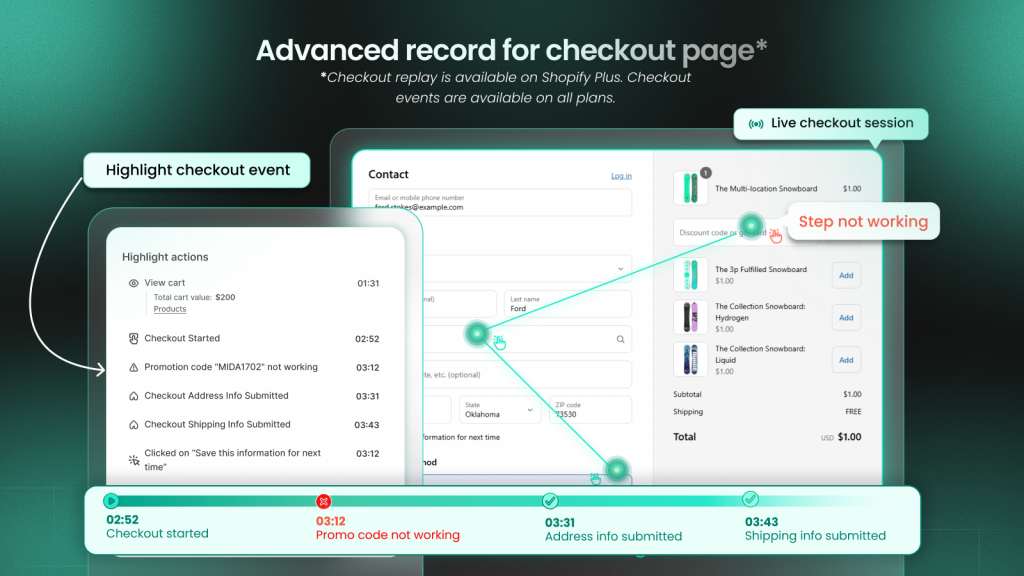
Review session recordings for cart behavior
Session recordings let you watch real customer behavior leading up to purchase or abandonment. You see where they paused, what they clicked, and whether they noticed your upsell offers at all.
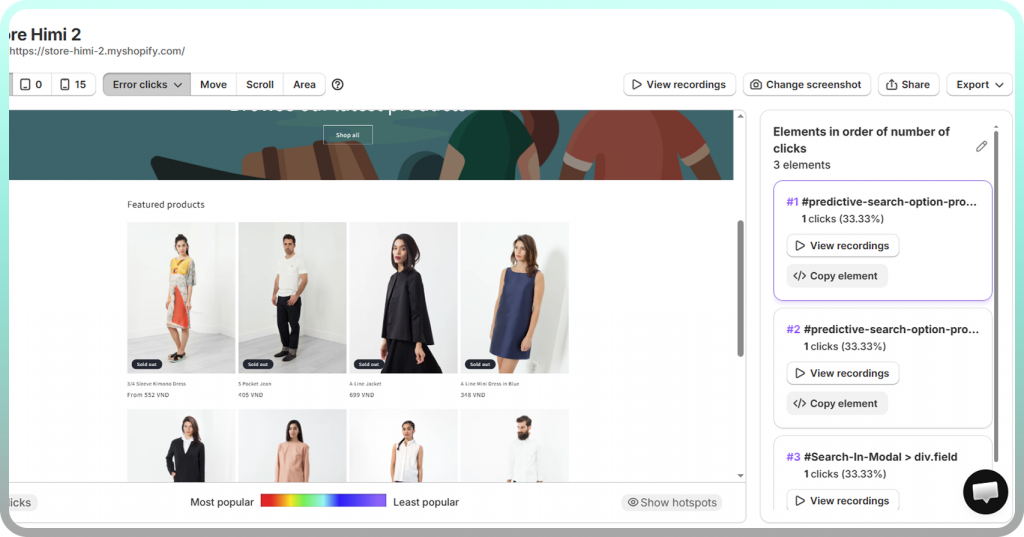
Use heatmaps to find product page friction
Click maps and scroll maps reveal which page elements get attention and which are ignored. If your “frequently bought together” section sits below where most shoppers scroll, they’re never seeing it.
Survey customers about purchase decisions
Targeted on-site surveys can capture reasons that behavioral data can’t reveal. When survey responses connect to session recordings, you get the complete picture—what shoppers said and what they actually did.
25 proven ways to increase average order value
Prioritize based on what your diagnostic work reveals rather than implementing everything at once.
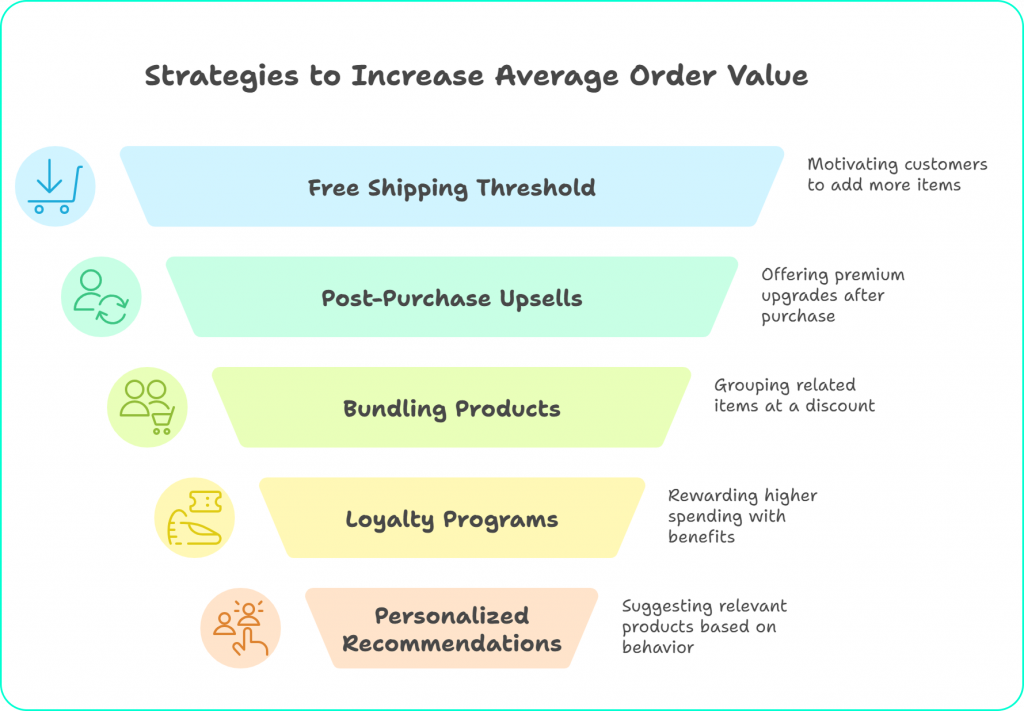
1. Set a free shipping threshold
Place your free shipping minimum about 10–20% above your current AOV. A store with $60 AOV might set free shipping at $75, motivating customers to add one more item.
2. Add one-click post-purchase upsells
Offer premium upgrades or add-ons immediately after a purchase is confirmed. The customer has already committed, so there’s no risk of cart abandonment.
3. Offer pre-checkout order bumps
Add small, relevant add-ons at checkout that require just one click to accept—warranty protection, gift wrapping, or a complementary sample.
4. Bundle complementary products
Group related products together at a slight discount compared to buying them separately. A skincare brand might bundle cleanser, toner, and moisturizer as a “complete routine” set.
5. Cross-sell related items on product pages
Show “frequently bought together” or “customers also viewed” sections. Cross-selling suggests complementary items (a phone case for a phone), while upselling suggests upgrades (a higher-capacity phone).
6. Cross-sell on the cart page
Display relevant add-ons when customers view their cart, before they proceed to checkout.
7. Add post-purchase cross-sells on the thank you page
Offer complementary products immediately after an order is completed, when purchase intent is at its highest.
8. Create tiered pricing options
Use good/better/best pricing structures to anchor customers toward the mid or premium tiers.
9. Use volume and quantity discounts
“Buy more, save more” pricing works especially well for consumable or repeat-purchase products.
10. Launch a loyalty and rewards program
Point-based systems reward higher spending with exclusive benefits. Customers close to a reward threshold often add items to reach it.
11. Offer buy now pay later options
Payment plans through services like Affirm, Klarna, or Shop Pay Installments remove price barriers for high-value orders.
12. Personalize product recommendations
Use browsing history, purchase history, and customer segments to surface relevant products to individual shoppers.
13. Use AI-powered recommendation engines
AI-driven recommendation tools analyze behavior patterns to suggest products most likely to convert.
14. Optimize product pages for higher cart value
Clear product photography, detailed descriptions, and visible recommendations all contribute to larger orders.
15. Add social proof near add-to-cart
Position reviews, ratings, and “X customers bought this” notifications near purchase triggers.
16. Use price anchoring to shift perception
Show a higher-priced option first to make mid-tier options feel like better value.
17. Create limited-time bundle offers
Combine urgency with bundled value to drive immediate, higher-value purchases.
18. Offer gift cards and store credit
Gift cards often result in customers spending above the card’s value.
19. Implement minimum order incentives
Offer a free gift, discount, or bonus when orders exceed a certain threshold.
20. Provide excellent pre-purchase customer support
Live chat and quick responses help customers feel confident about buying more or upgrading.
21. Simplify checkout to reduce drop-off
Fewer steps and clearer forms keep customers in the buying flow. Streamlining your Shopify checkout is one of the fastest ways to protect AOV gains.
22. A/B test AOV tactics continuously
Test different bundle offers, threshold amounts, and upsell placements to find what works for your specific audience.
23. Analyze device-specific behavior for mobile optimization
Mobile often has lower AOV due to UX issues. Cross-device heatmaps reveal where mobile shoppers struggle compared to desktop users.
24. Use exit-intent offers to save carts
Trigger a special offer when a customer shows signs of leaving without completing a larger order.signs of leaving without completing a larger order.
25. Segment customers for targeted AOV campaigns
Create customer segments—first-time vs. returning, high-value vs. low-value—and target each with tailored AOV approaches.
How to measure and track AOV performance
Key metrics to monitor alongside AOV
- Conversion rate: Ensure AOV tactics don’t hurt overall conversions
- Revenue per visitor: Combines the impact of conversion rate and AOV
- Cart abandonment rate: Watch for friction introduced by new upsell tactics
- Customer lifetime value: Track the long-term impact of AOV improvements
Segment AOV by traffic source and campaign
Break down AOV by UTM parameters, channels, and campaigns to see what drives high-value orders.
Track AOV trends over time
Monitor weekly or monthly trends rather than single data points.
Common AOV mistakes to avoid
Over-discounting without a threshold
Blanket discounts without a minimum spend requirement can actually lower AOV.
Showing upsells too late in the journey
Upsells after checkout confirmation are less effective than pre-purchase or in-cart offers.
Ignoring mobile UX issues
Mobile-specific friction prevents higher mobile AOV.
Not testing before scaling
Rolling out AOV tactics site-wide without A/B testing risks hurting conversions.
Turn behavior data into higher AOV
Increasing AOV requires understanding real customer behavior—where shoppers hesitate, what they click, and why they don’t add more to their cart. Behavioral analytics tools connect session replays, heatmaps, and funnel data to reveal where revenue opportunities exist.
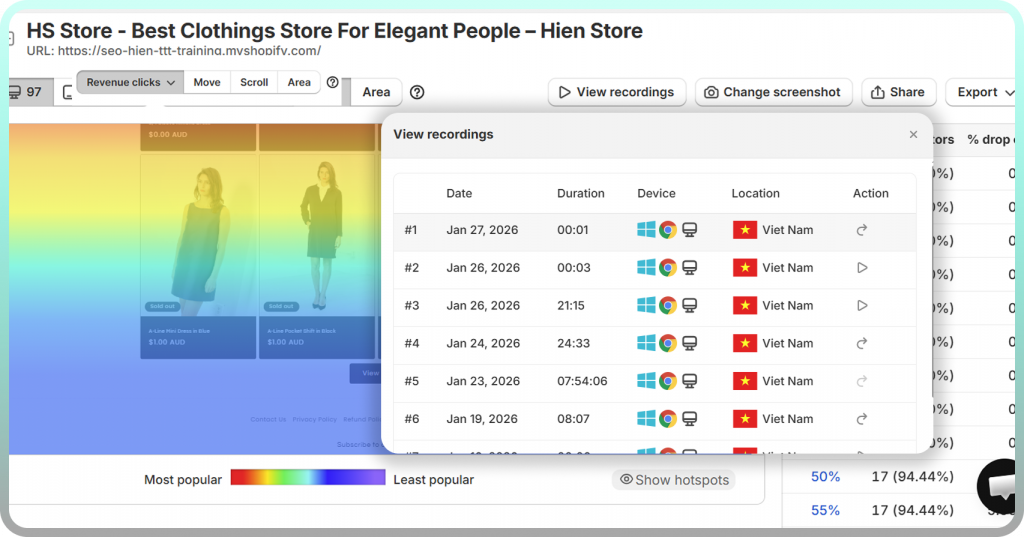
See exactly where your shoppers drop off and why.
FAQs about average order value
What is the difference between average order value and average order size?
Average order value measures the dollar amount per transaction, while average order size typically refers to the number of items per order.
How does AOV differ between B2B and B2C stores?
B2B stores typically see much higher AOV than B2C because business buyers purchase in larger quantities and at higher price points.
How long does it take to see results from AOV optimization strategies?
Most AOV tactics show measurable results within two to four weeks, though A/B testing periods and traffic volume affect how quickly you can validate improvements.
Can AOV optimization tactics negatively affect conversion rate?
Yes—aggressive upselling or unrealistically high free shipping thresholds can frustrate customers and hurt conversions, which is why A/B testing and monitoring both metrics together is essential.
How does average order value affect customer lifetime value?
Higher AOV directly increases customer lifetime value by generating more revenue per transaction, especially when combined with strong retention and repeat purchase rates.

Hien Tran
I’m Hien Tran, a Product Marketing Executive at MIDA, specializing in eCommerce growth and conversion optimization. I focus on bridging product capabilities with real merchant needs—turning insights from heatmaps, session replays, and funnel analytics into actionable strategies that drive measurable results.


