Mida vs Lucky Orange: Which Tool Delivers Better Results?
When you’re trying to understand why shoppers abandon carts or where your checkout flow breaks down, session replay and heatmap tools promise to show you exactly what’s happening. Both Mida and Lucky Orange offer visibility into customer behavior on Shopify stores, but the experience of using them—and the reliability of what you see—can differ significantly.
Lucky Orange has been around for years and offers session recordings, heatmaps, live chat, and conversion funnels. Mida is built exclusively for Shopify, focusing on ecommerce-specific insights like abandoned checkout tracking, revenue-linked replays, and element-level behavior analysis. If you’re evaluating both tools, the decision comes down to recording reliability, data accuracy, ease of use, and whether the insights you get actually help you fix what’s costing you revenue.
This comparison walks through how each tool performs across the features that matter most to Shopify merchants—so you can choose the one that delivers actionable results without the frustration.
>> You may also like: Best Shopify Heatmap Apps: 12 Tools Tested for Performance in 2026
Key Features and Capabilities
Session Recording Reliability
Session recordings are only useful if they actually capture what happened. Lucky Orange users consistently report that recordings fail to capture visits or miss key moments. One merchant described it as “many times it doesn’t capture the session and fails to record key moments,” while another noted that “not all visits are recorded or play back properly.” When playback does work, users report significant lag: “alot of video capture are lagging and it can be difficult sometimes to see where exactly what makes customers leave.”
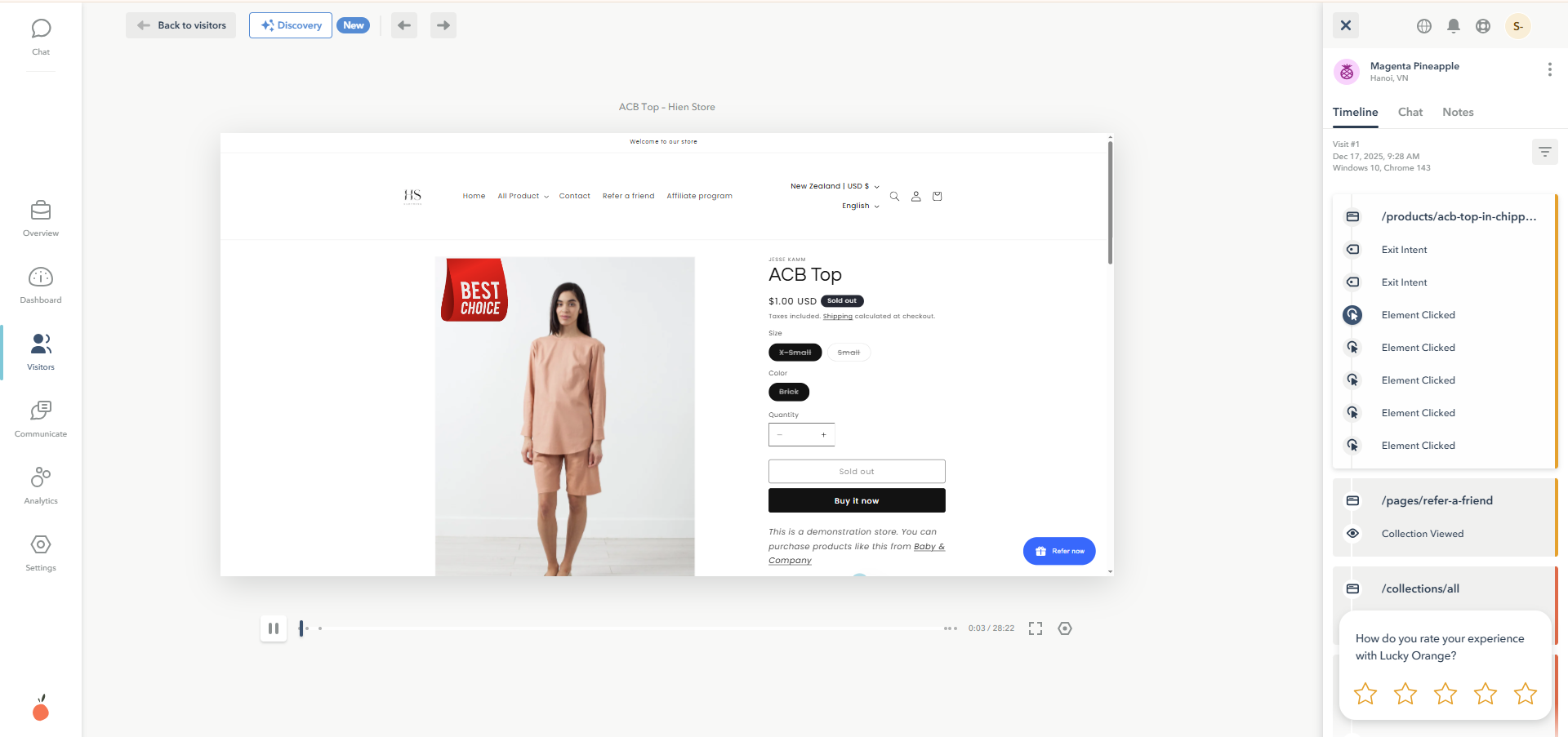
Lucky Orange session replays Interface
Mida’s session replays are built to capture complete Shopify journeys, including checkout events that general tools often miss. You see the full context: customer profiles, cart value, order outcomes, and on-page interactions. Every recording is linked to a Relevance Score, so you can filter for the sessions that matter—abandoned checkouts, first purchases, frustrated visitors—without watching hours of irrelevant traffic. You’re not left wondering whether a critical moment was captured; you can see exactly what happened before each cart abandonment or completed order.
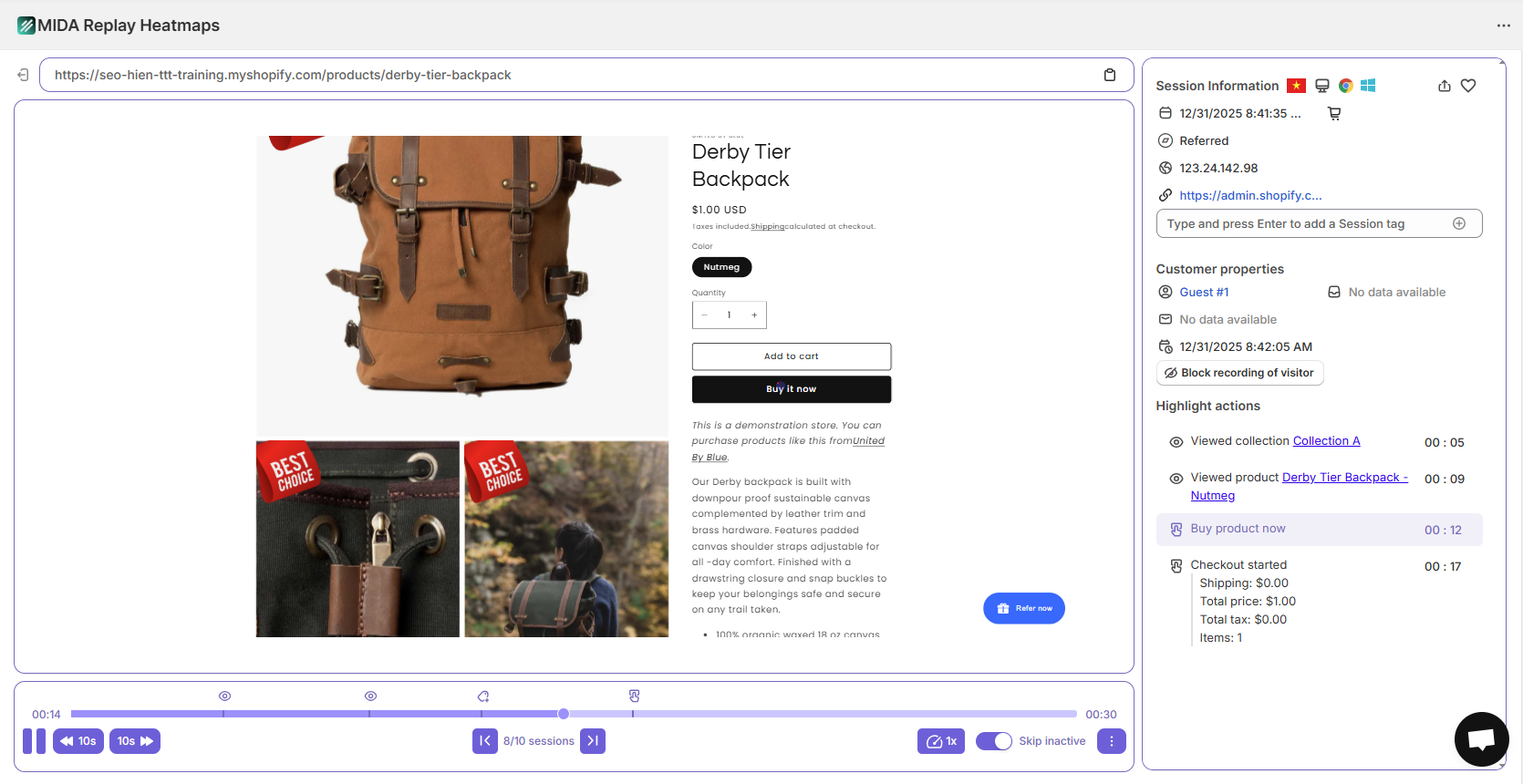
MIDA session replays Interface
Heatmaps That Show More Than Clicks
Lucky Orange provides heatmaps, but users have identified a critical limitation: “we can’t see when a customer scrolls down, as the screenshots remain fixed at the top of the page.” This means you’re missing visibility into whether shoppers even see your product details, reviews, or add-to-cart buttons below the fold.
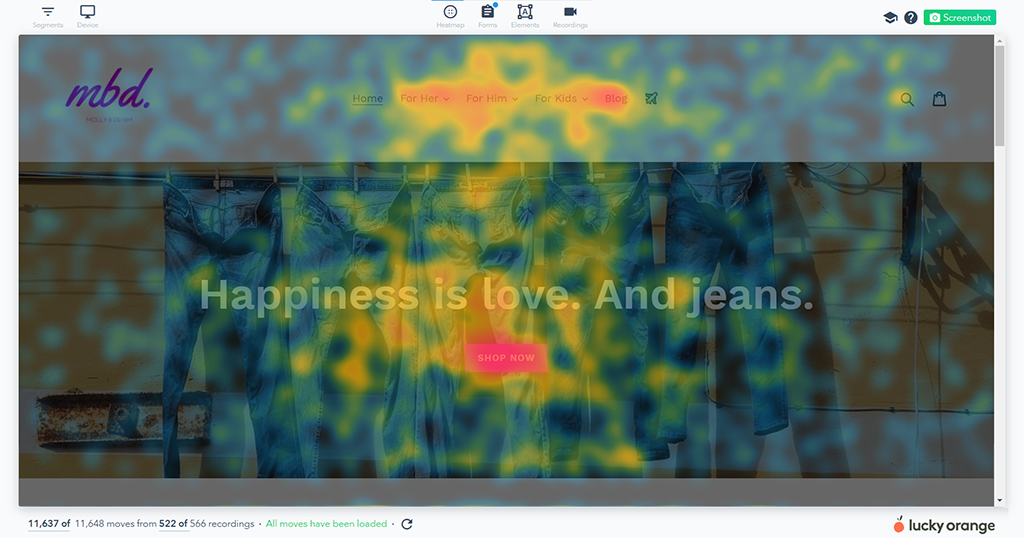
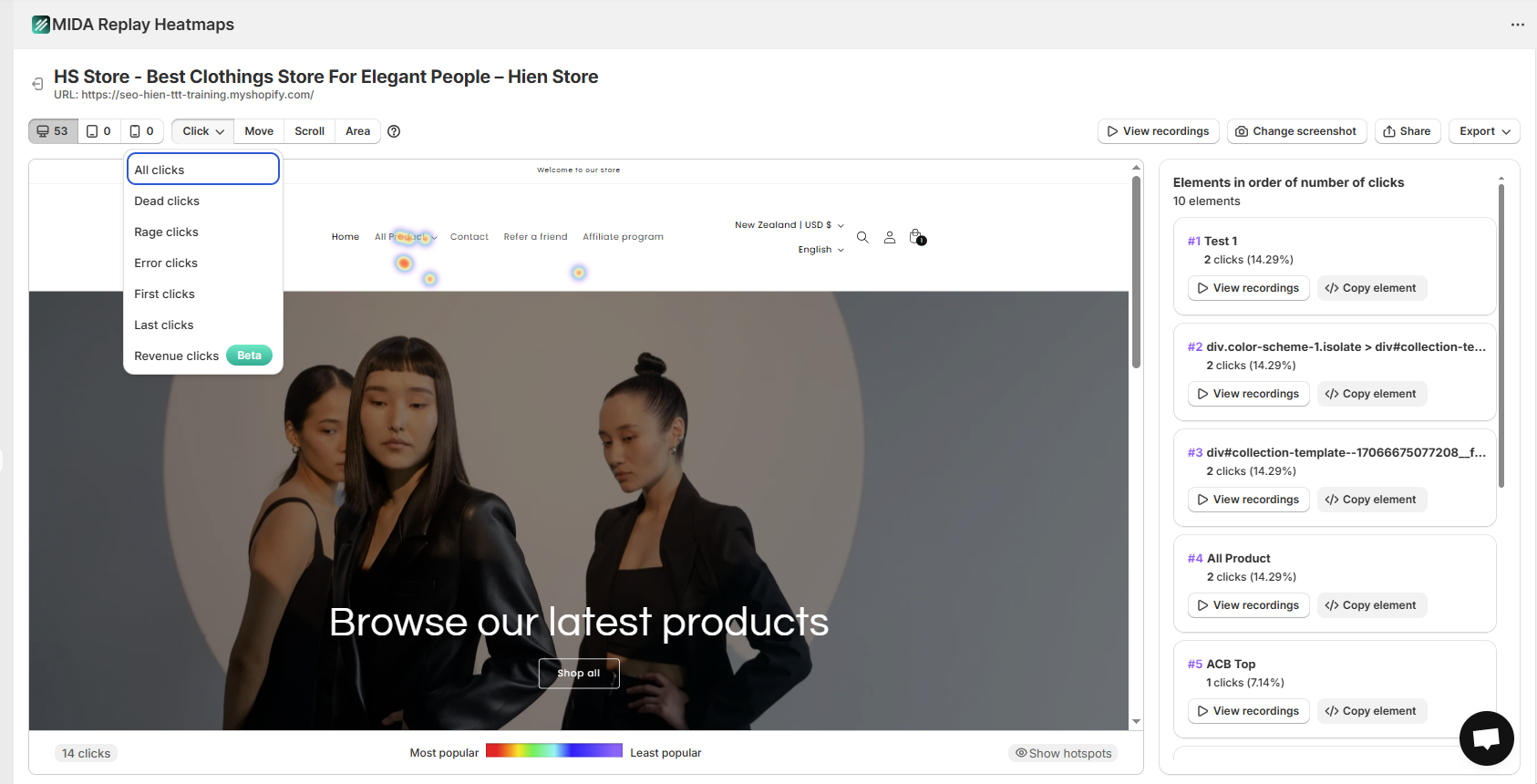
Mida’s heatmaps show clicks, cursor movement, and scroll depth across every page, with device-specific breakdowns so you know exactly how mobile behavior differs from desktop. You also get element-level insights: CTR for individual buttons, images, and sections, plus automatic detection of rage clicks, dead clicks, and error clicks. When you spot a problem in a heatmap—say, a high rage-click rate on a non-functional element—you can click directly into the session replays where that behavior occurred. You’re not just seeing where people clicked; you’re understanding why they got frustrated and left.
Ecommerce-Specific Analytics
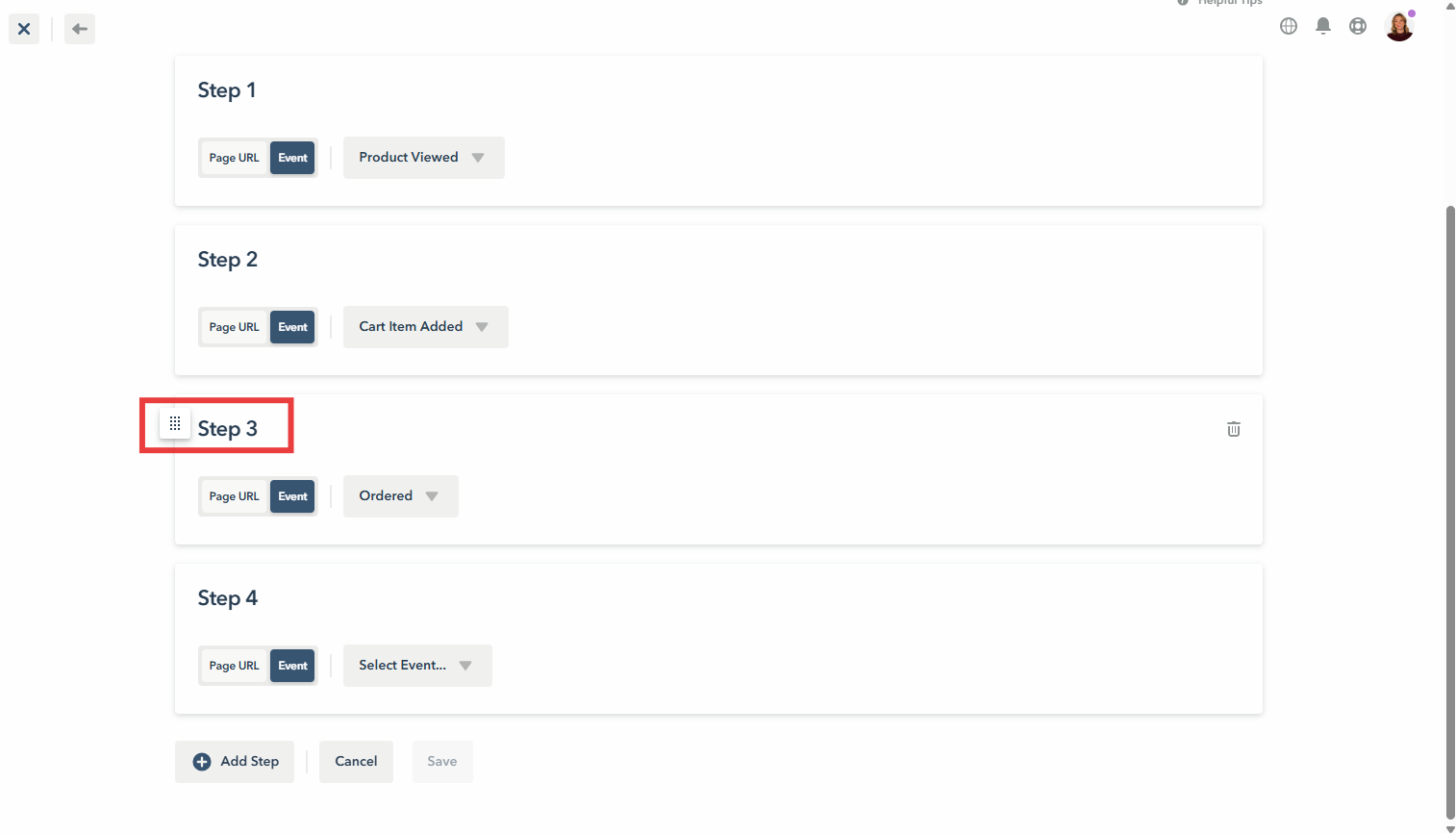
Lucky Orange offers funnels and event tracking, but it’s built as a general website analytics tool. Several users noted that “the data presented is however not 100% accurate,” with traffic source counts that “do not add up to ‘All Visits.'” When your data doesn’t reconcile, you lose confidence in the insights.
Lucky Orange custom funnel
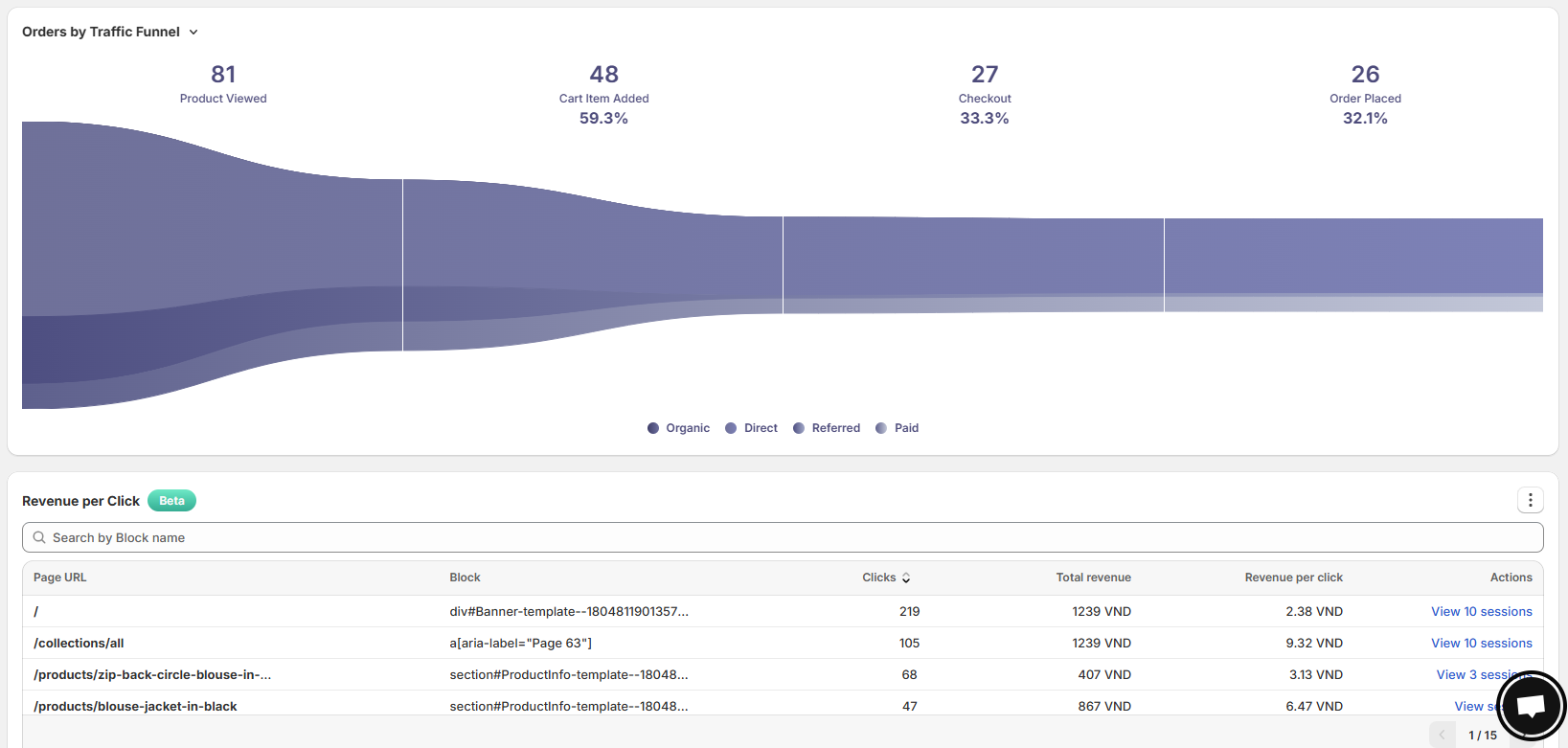
Mida’s Ecommerce Analytics Dashboard is purpose-built for Shopify. You see visitors, sessions, successful orders, top pages, and device breakdowns in a single view that understands Shopify commerce context. The Order Funnel Visualization shows drop-offs from product view to add-to-cart to checkout to completed order, so you know exactly which step is costing you revenue. Because Mida is Shopify-native, it tracks checkout events, abandoned cart details, and customer-level behavior that generic tools can’t access. You’re working with data you can trust to make decisions.
MIDA conversion funnel and revenue per click by element tracking
Automated Insights and Monitoring
Lucky Orange sends daily email summaries, but users report that these are basic overviews without actionable guidance. The app doesn’t automatically surface issues or recommend fixes; you have to manually dig through recordings and heatmaps to find problems.
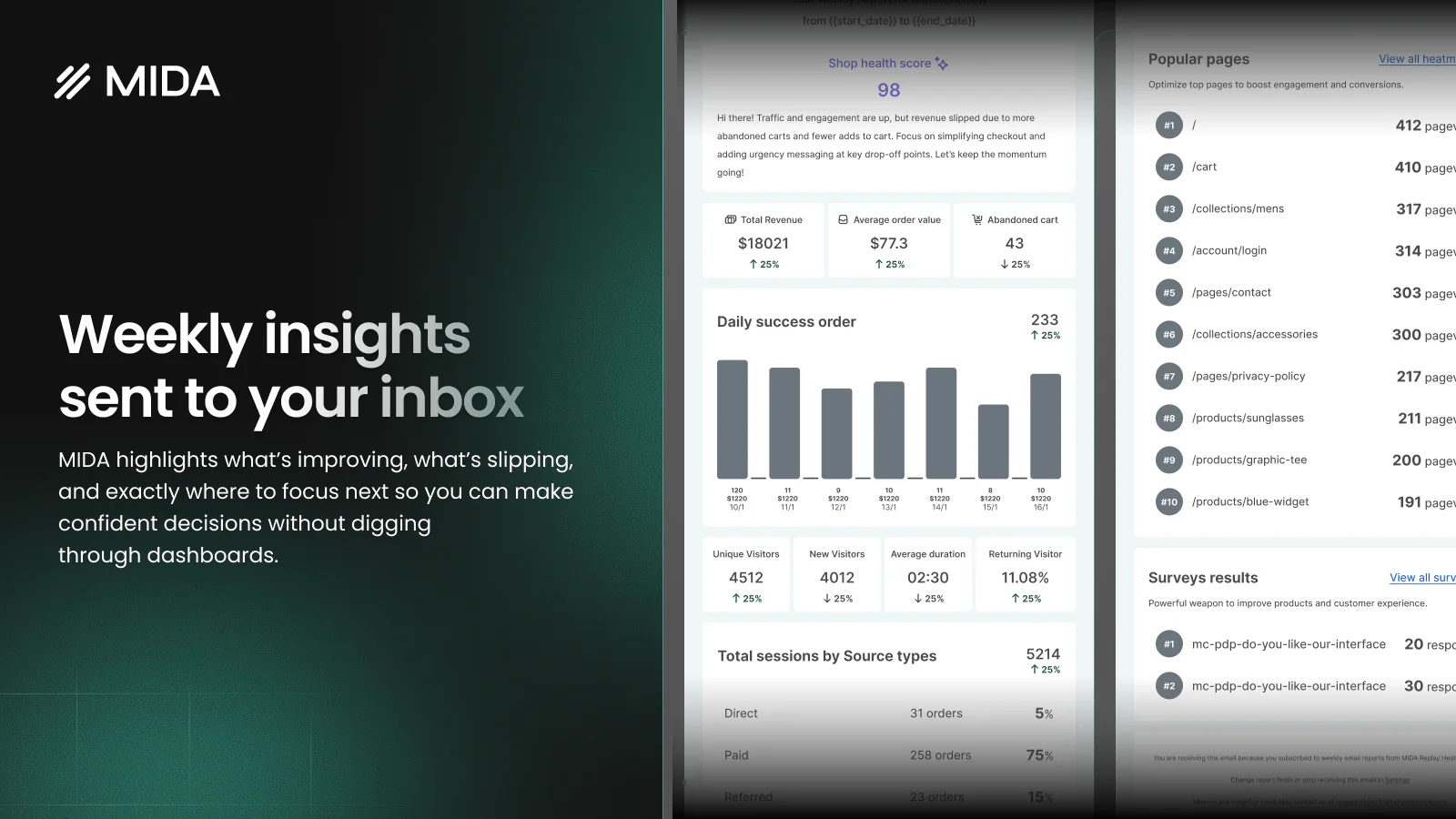
Mida provides AI-Powered Weekly Email Reports that explain your shop health score, abandoned cart trends, user engagement levels, traffic patterns, and performance changes week-over-week. These reports turn everyday visitor behavior into a steady stream of UX and conversion improvements, highlighting what needs your attention without requiring you to log in and search. You receive proactive insights, not just raw data.
User Experience and Ease of Use
Interface Clarity
Lucky Orange users describe the interface as “crowded and overwhelming for first-time users.” When you’re trying to quickly identify why carts are being abandoned, a cluttered dashboard slows you down. The tool also lacks clear indicators of recording completeness or quality, leaving you uncertain whether what you’re seeing represents the full customer journey.
Mida is designed for everyday Shopify teams, not analytics specialists. The interface is scannable and organized around the questions you’re trying to answer: Which sessions should I watch? Where are shoppers dropping off? What elements are causing friction? Reusable Views let you save filter combinations—like “abandoned checkouts on mobile from paid ads”—so you can return to high-priority segments in one click. You spend less time navigating and more time fixing issues.
Setup and Integration
Both tools offer one-click Shopify integration, and Lucky Orange users consistently praise the “easy one-click Shopify integration with simple setup process.” This is a strength Lucky Orange shares with Mida.
Mida’s setup is equally straightforward, with the added benefit of being built exclusively for Shopify from the ground up. Because it’s Shopify-native, you get automatic access to checkout tracking, customer profiles, and order data without additional configuration. There’s no need to manually set up events or funnels for standard ecommerce flows—Mida understands your store structure and tracks the journeys that matter by default.
Performance Impact
Lucky Orange users occasionally mention slow session loading: “Sometimes can take a while to load the sessions.” When you’re trying to quickly diagnose an issue during a campaign, waiting for recordings to buffer is frustrating.
Mida is built with lightweight implementation that doesn’t impact store speed. Session replays load quickly, and the platform is optimized for fast playback so you can move through multiple recordings efficiently. You’re not waiting; you’re watching, understanding, and acting.
Pricing and Value
Transparent Billing
Lucky Orange has significant billing and cancellation issues reported by users. One merchant explained: “We thought we had downgraded our Lucky Orange plan. Their app showed a message saying ‘No active subscription,’ so we assumed it was canceled. Turns out that message was a bug… In reality, we had been getting billed.” Another user noted: “After downgrading to the free plan on their website, I was still charged for another month… I also needed to manually delete the app from our shop to fully stop the charges, which wasn’t clearly communicated.”
These aren’t isolated incidents—they represent a pattern of confusing subscription states and unexpected charges that erode trust. When you’re managing a business, you need to know exactly what you’re paying for and when charges will occur.

Lucky Orange Pricing plan
Mida provides completely transparent billing through the Shopify App Store, with clear plan details and straightforward cancellation. Your subscription state is always accurate, and there are no hidden steps to stop billing. You see your next charge date, your current plan limits, and your usage—all in one place. Pricing is designed to scale with your store, from a generous free plan to growth-focused tiers that align with your traffic and revenue.

MIDA pricing plan
Session Quota Management
Lucky Orange users report that the app can track internal visits and support staff visits, consuming session quota and forcing upgrades. One merchant described being “burned through my session quota by tracking my own visits AND all the visits from their support staff during 3+ hours of troubleshooting (which forced me into a $44 upgrade).” This is particularly frustrating when you’re paying for insights into customer behavior, not your own team’s activity.
Mida’s session tracking is designed to focus on real customer behavior. You can filter out internal traffic and focus your quota on the sessions that drive insights. The platform doesn’t penalize you for troubleshooting or testing; it’s built to capture the journeys that matter for optimization, not inflate your usage with irrelevant recordings.
Value for Price-Sensitive Merchants
Some Lucky Orange users noted that “the pricing is slightly on the higher side” and expressed hope for “more flexible pricing options in the future.” One merchant switched to Microsoft Clarity because it’s “completely free and does everything we needed,” suggesting that Lucky Orange’s pricing doesn’t always align with the value delivered, especially for basic use cases.
Mida offers a free plan that provides meaningful access to session replays, heatmaps, and analytics—not a limited trial, but a real free tier you can use to understand customer behavior and make improvements. Paid plans are structured around the features and volume that growing stores need, with clear upgrade paths as your traffic and optimization requirements scale. You’re paying for Shopify-specific capabilities that directly impact revenue, not generic features you could get elsewhere for free.
Customer Support
Responsiveness and Resolution
Lucky Orange receives praise for personalized onboarding, with users highlighting “excellent customer support that is patient, quick to respond, and highly knowledgeable” and “personalized onboarding calls with named representatives.” However, when technical issues arise, the experience changes. Users report “support response times can be slow (24+ hours) during critical issues” and troubleshooting advice that is “generic (‘uninstall then install again’).”
One merchant described their support experience as “Shocking technical support!!!! They’ll Leave you hanging for few days whilst continuing the billing cycle.” Another called it “Argumentative Support,” noting that “the way support handled my reasonable request for a refund was downright embarrassing.” When your store is losing revenue due to a technical issue, waiting days for a response—or receiving pushback on a refund request—creates real business impact.
Mida’s support is focused on helping you get value quickly. Because the platform is built specifically for Shopify, the support team understands ecommerce-specific questions: how to interpret checkout abandonment patterns, which sessions to prioritize, how to connect heatmap insights to layout changes. You’re not working with generalists; you’re working with a team that knows Shopify stores and can help you translate behavior data into action.
Handling Technical Failures
When Lucky Orange’s recording reliability issues occur, users describe frustrating support interactions. One merchant noted that after “3+ hours of troubleshooting” that consumed their session quota and forced an upgrade, “it still didn’t work; no alerts, visitor tracking broken.” The refund request was met with resistance rather than resolution.
Mida’s approach is to ensure recording reliability from the start, with Shopify-native implementation that captures complete journeys including checkout events. If issues do arise, the support philosophy is resolution-focused: help you understand what happened, fix the problem, and ensure you’re getting the insights you need to optimize your store. You’re not left hanging while billing continues.
Integration Capabilities
Shopify-Native vs. General Platform
Lucky Orange integrates with Shopify, but it’s built as a general website analytics tool that works across multiple platforms. This means it doesn’t have deep access to Shopify-specific data like customer profiles, checkout events, or order context. Users noted issues like inability to see scrolling behavior and data accuracy problems, which stem from the tool not being purpose-built for ecommerce.
Mida is built exclusively for Shopify, which means every feature is designed around the data and workflows that matter to Shopify merchants. Session replays include customer-level context: whether this is a first-time visitor or returning customer, what’s in their cart, whether they completed an order. Checkout tracking captures events that happen in Shopify’s checkout flow, which general tools can’t access. Funnels are pre-configured for ecommerce journeys: product view → add-to-cart → checkout → order. You’re not adapting a generic tool to fit your store; you’re using a platform that understands Shopify commerce from the ground up.
Marketing Attribution and Campaign Analysis
Lucky Orange users mention using it to understand “Meta Ads pixel performance and paid traffic behavior” and to identify “traffic sources,” but the tool doesn’t provide deep campaign-level analysis. One user noted data accuracy issues where “the daily breakdown/count of source traffic does not add up to ‘All Visits,'” which undermines confidence in attribution insights.
Mida connects behavior to traffic sources and campaigns, so you can filter sessions by ad campaign, see how paid traffic behaves differently from organic, and understand which campaigns drive engaged shoppers versus bounces. Because the data is accurate and reconciled, you can trust the insights when you’re making decisions about ad spend and landing page optimization. You see not just where traffic came from, but what that traffic did—and whether it converted.
Addressing Specific Pain Points
Recording Reliability and Completeness
The most critical complaint about Lucky Orange is recording reliability: sessions that aren’t captured, playback that lags, and no clear explanation for why recordings fail. When you’re trying to diagnose cart abandonment or checkout friction, missing recordings mean you’re flying blind on your most important journeys.
Mida’s session replay is built to capture complete Shopify journeys with high reliability. You see checkout events, customer context, and full page interactions. The Relevance Score helps you identify which sessions are most important, and filters let you focus on specific outcomes: abandoned checkouts, completed orders, frustrated visitors. You’re not wondering whether the critical moment was captured—you can watch exactly what happened and understand why shoppers left or converted.
Data Accuracy and Trust
Lucky Orange users report data accuracy issues: traffic counts that don’t reconcile, source attribution that doesn’t add up. One merchant noted: “The data presented is however not 100% accurate… for example the daily breakdown / count of source traffic does not add up to ‘All Visits.'” When your analytics don’t match, you lose confidence in every insight.
Mida’s analytics are built on accurate, Shopify-native data. The Ecommerce Analytics Dashboard shows visitors, sessions, and orders with clear definitions and consistent counting. Funnel drop-offs are calculated from actual Shopify events, not estimated from page views. Because the platform is purpose-built for Shopify, the data you see reflects what actually happened in your store, and you can make decisions with confidence.
Scroll Visibility and Full-Page Behavior
Lucky Orange users identified a significant limitation: “we can’t see when a customer scrolls down, as the screenshots remain fixed at the top of the page.” This means you can’t tell whether shoppers are seeing your product descriptions, reviews, or calls-to-action below the fold—critical information for understanding why they’re not adding to cart.
Mida’s session replays capture full-page scrolling behavior, so you see exactly how far down the page each visitor scrolled and where they stopped. Heatmaps include scroll depth analysis with average fold lines, showing you what percentage of visitors see each section of your page. You can identify when important content is being missed and adjust your layout accordingly. You’re not guessing whether shoppers saw your add-to-cart button—you’re watching them scroll past it or stop before reaching it.
Actionable Insights, Not Just Data
Lucky Orange users expressed frustration that the tool doesn’t provide “automated conclusions or recommendations based on collected data.” You see recordings and heatmaps, but you’re left to interpret what they mean and figure out what to fix. For time-constrained merchants, this creates a gap between data and action.
Mida surfaces actionable insights automatically. Element-level behavior analysis shows rage clicks, dead clicks, and error clicks—clear signals of friction. AI-powered weekly reports highlight abandoned cart trends, engagement changes, and performance issues that need attention. When you view a heatmap, you see CTR for individual elements and can click directly into the sessions where those elements were clicked. You’re not just collecting data; you’re receiving guidance on what to fix first and why it matters for revenue.
Internal Traffic and Session Quota Protection
Lucky Orange users report that the app tracks internal visits and support staff visits, consuming session quota and forcing upgrades. One merchant was “burned through my session quota by tracking my own visits AND all the visits from their support staff during 3+ hours of troubleshooting (which forced me into a $44 upgrade).” This feels like being penalized for trying to use the tool correctly.
Mida’s session tracking focuses on real customer behavior. You can filter out internal traffic and ensure your quota is spent on the sessions that drive optimization insights. The platform doesn’t inflate your usage with team visits or support activity; it’s designed to capture the journeys that matter for understanding and improving customer experience. You’re paying for insights into customer behavior, not your own troubleshooting sessions.
The Clear Choice for Shopify Merchants
Lucky Orange offers session recordings and heatmaps, but the experience is undermined by recording reliability issues, data accuracy problems, confusing billing, and support that can be slow or argumentative when technical issues arise. When you’re trying to reduce cart abandonment and increase revenue, you need tools that work consistently and data you can trust.
Mida is built exclusively for Shopify, with session replays that capture complete customer journeys including checkout events, heatmaps that show scroll behavior and element-level interactions, and analytics that connect behavior to real orders and revenue. You get accurate data, transparent billing, and a platform designed to surface actionable insights—not just show you recordings and leave you to figure out what they mean.
If you want to see exactly where shoppers get stuck, understand why they abandon carts, and confidently make changes that increase conversion, Mida gives you the visibility and insights you need without the frustration of missing recordings, inaccurate data, or billing surprises.
See Your Store Through Your Customers’ Eyes
Stop guessing why shoppers leave. Watch real sessions, see exactly where they get stuck, and turn abandoned carts into revenue.


